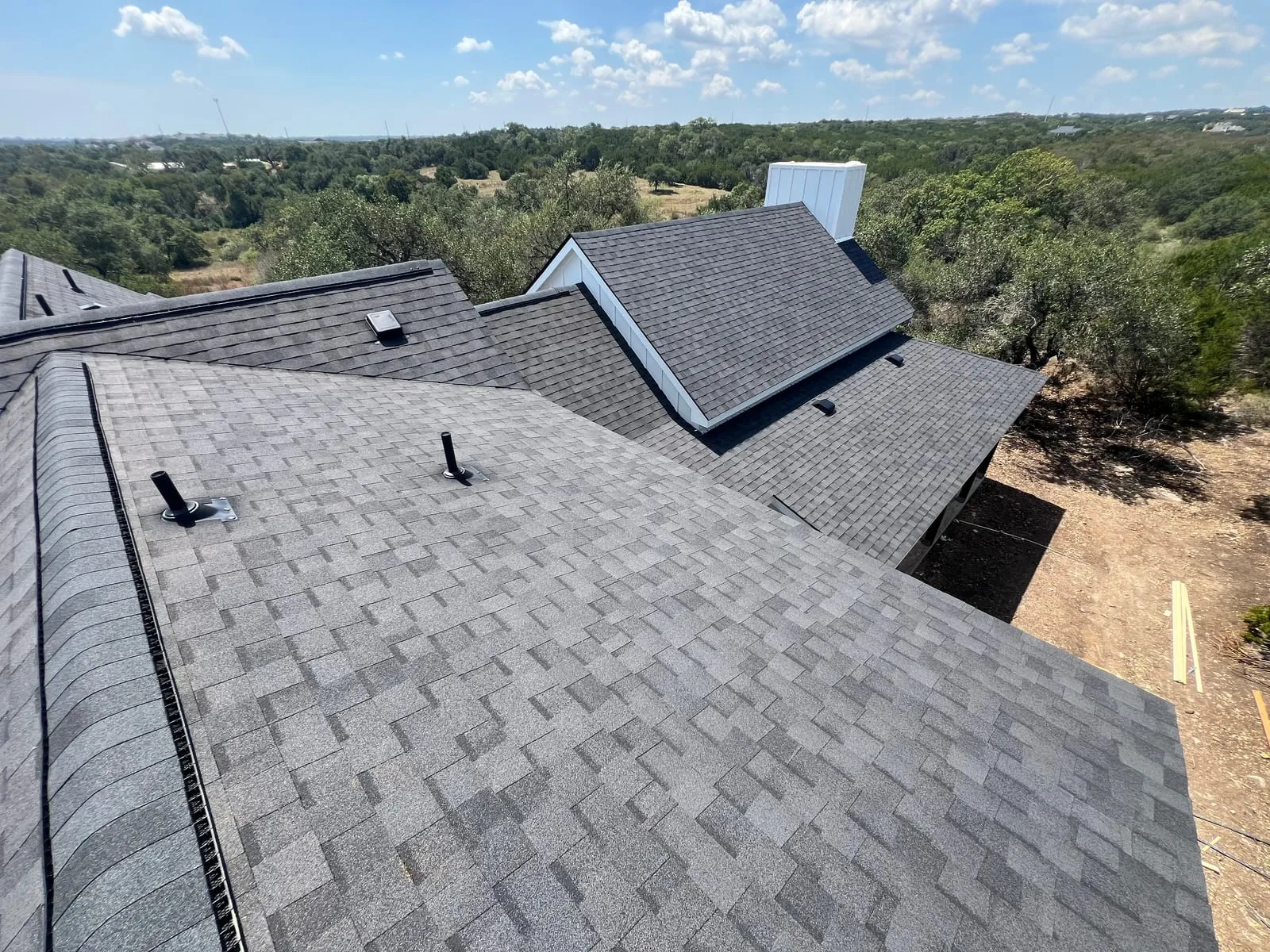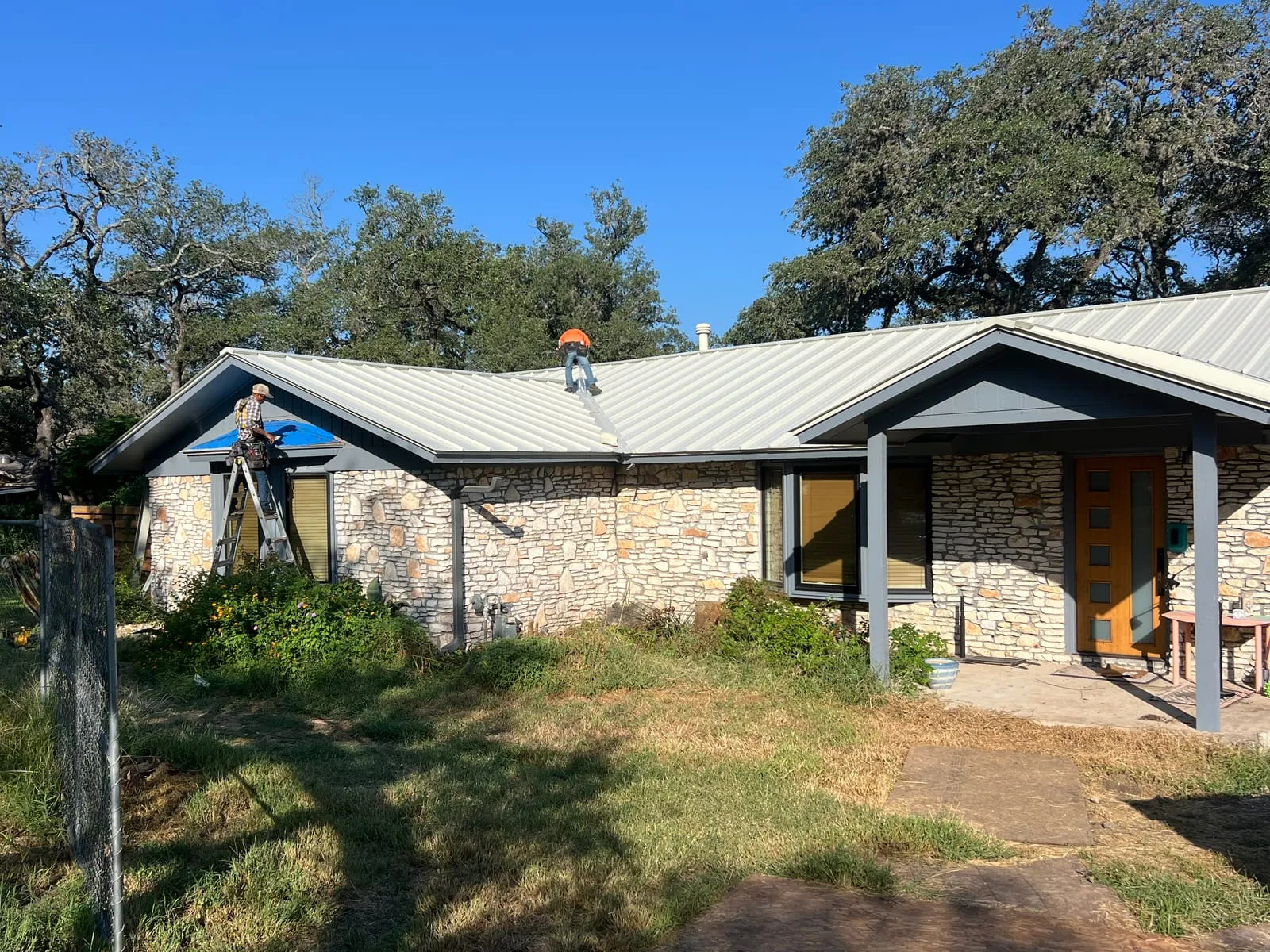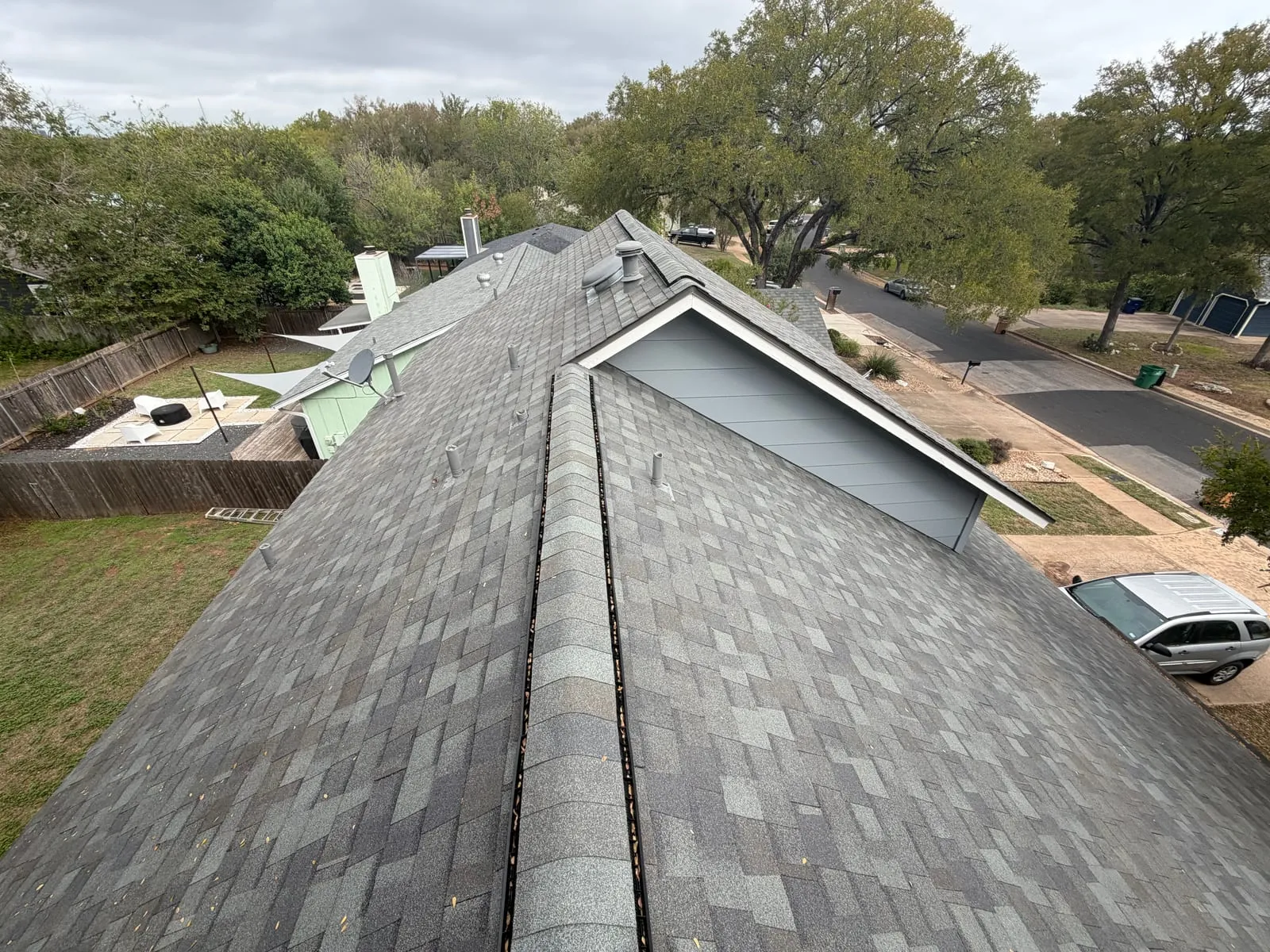
Short answer: Cedar Park and Leander sit side by side, but their homes are different ages, and that changes the roof conversation. About a third of Cedar Park’s housing was built before 2000, so many homes are on a second roof and the job is about what’s underneath. About 6 in 10 of Leander’s homes were built in 2010 or later, so many owners are facing their first replacement, or dealing with hail damage on a young roof.
Here’s what to check on each, what a good replacement includes, and what it costs.
How old are the homes in Cedar Park and Leander?
Cedar Park is older. Leander is newer. According to the U.S. Census Bureau’s latest five-year survey:
- Cedar Park: about a third of the city’s housing was built before 2000, and about 7 in 10 before 2010.
- Leander: about 6 in 10 homes were built in 2010 or later, and fewer than 1 in 5 before 2000.
A shingle roof realistically lasts about 15 to 20 years in Central Texas. Our guide to how long a roof lasts in Austin explains why.
Replacing a roof on an older Cedar Park home
The shingles are the easy part. Check what’s underneath. A home built in the 1980s or 1990s has likely had at least one roof replaced already. That second roof may now be aging out too.
What to look at:
- Layers. Some older roofs were re-covered instead of torn off. A new roof can’t go over one that already has two layers, so a full tear-off is needed.
- Decking. Older decking is more likely to have soft or rotted sheets. They only show up once the old roof comes off, so ask for decking priced per sheet in the estimate.
- Ventilation. Older attics often have too little airflow. A hot attic cooks shingles from underneath and raises cooling bills. Replacement is the time to fix it.
- Flashing and pipe boots. Rusted or cracked flashing around chimneys, walls and vents should be replaced, not reused.
A home built in the 2000s with its original roof is 17 to 26 years in, and that’s about 35% of Cedar Park’s housing. If that’s yours, it’s time for an inspection.
Replacing a roof on a newer Leander home
On a young roof, start by asking whether it needs replacing at all.
- Under about 12 years old with damage in one spot? That’s usually a roof repair, not a replacement.
- Hail damage on several slopes? It may be an insurance claim. Photograph everything before anyone touches the roof, and get an inspection before you call your insurer. Our insurance guide walks through it.
- Built in the early 2010s with the original roof? It’s entering the 15-year replacement window. Start planning, even if it looks fine from the ground.
Read your paperwork. Builder warranties and shingle manufacturer warranties vary, and some depend on registration or on who does the repair. Check yours before anyone works on the roof.
Repair or replace?
Roof age decides it, and how widespread the damage is breaks the tie.
Repair usually makes sense when the roof is under about 12 years old and the damage is in one area, like a lifted shingle, a failed pipe boot or loose flashing.
Replacement usually makes sense when:
- the roof is past 15 years
- granule loss is widespread
- leaks keep appearing in different spots
- a storm damaged several slopes
Our storm damage and insurance claim pages cover what to do after a storm.
What should a new roof include?
These are the items that matter most on a shingle roof. A good estimate spells them out:
- Full tear-off. Stripping to the decking is the only way to find soft or rotted sheets before new shingles go on.
- Drip edge at the eaves and rake edges. It’s a small metal strip that keeps water off the fascia, and it’s an easy thing for a cut-rate crew to skip.
- Wind-rated shingles. Shingles should be labeled with a wind rating that fits the local design wind speed.
- Underlayment and flashing installed to the code and the shingle manufacturer’s instructions.
- Ventilation that matches the attic.
Consider an upgrade. Impact-rated shingles cost more up front and hold up better against hail. The Texas Department of Insurance says each insurer sets its own discount for impact-resistant roofs, and a Class 4 rating gets the highest. Our metal vs. shingles guide covers the longer-lasting option.
Does your HOA need to approve the new roof?
In many Cedar Park and Leander neighborhoods, yes. Master-planned subdivisions usually have HOA architectural rules, and roofing is squarely covered.
Depending on the neighborhood, the rules may cover:
- shingle color, often from an approved list
- shingle profile or style
- whether metal or other materials are allowed
One protection worth knowing: Texas Property Code § 202.011 bars HOAs from prohibiting wind- and hail-resistant shingles, as long as they resemble the shingles in the subdivision, are more durable and of equal or better quality, and match the surrounding homes. That covers impact-rated shingles. It doesn’t guarantee approval for a switch to standing-seam metal or tile.
The order that saves you grief:
- Pick the material and the exact color name with your roofer.
- Submit it to your HOA’s architectural committee before scheduling the work.
- Get the approval in writing and keep it.
HOA approval is often the longest step in the schedule. If you’re working an insurance claim, start the HOA paperwork early.
What does a roof replacement cost in Cedar Park or Leander?
About the same as the rest of the Austin metro. In 2026 most homeowners replacing an architectural shingle roof on a typical 2,000 square foot home land in roughly the $12,000 to $18,000 range.
What moves your number:
- Pitch and complexity. Steep roofs, dormers and multiple valleys take longer and need more flashing.
- Decking. Rotten sheets found at tear-off are the most common change order, and they’re more likely on older homes.
- Material. Impact-rated shingles and metal cost more up front.
Our Austin roof replacement cost guide breaks the ranges down by material.
How do you pick a roofer in Cedar Park or Leander?
Ask what they’ll check before they quote. On an older home, a good roofer asks about layers and decking. On a newer one, they’ll tell you honestly if a repair will do.
Also check:
- A local address and past jobs in Williamson County you can look at
- Liability insurance and workers’ compensation. Ask for the certificates.
- A written scope covering materials, underlayment, drip edge, flashing, ventilation, decking price and cleanup
- Warranty terms that separate the manufacturer’s material warranty from the roofer’s workmanship warranty
- No deductible games. In Texas it’s illegal for a contractor to pay, waive or rebate your deductible on an insurance-paid roof without your insurer’s consent.
Our guide to choosing a roofing contractor goes further.
Thinking about your Cedar Park or Leander roof?
The useful first step is knowing what shape your roof is in. Schedule your free roof inspection and we’ll document the condition and tell you straight whether it’s a repair or a replacement. We’ll also walk you through the HOA side before anything gets ordered.
See our Cedar Park and Leander service area pages for everything we handle locally.
Sutton Roofing is a roofer serving Cedar Park, Leander, Austin, and Central Texas, helping local homeowners with roof repair, replacement, and storm damage.