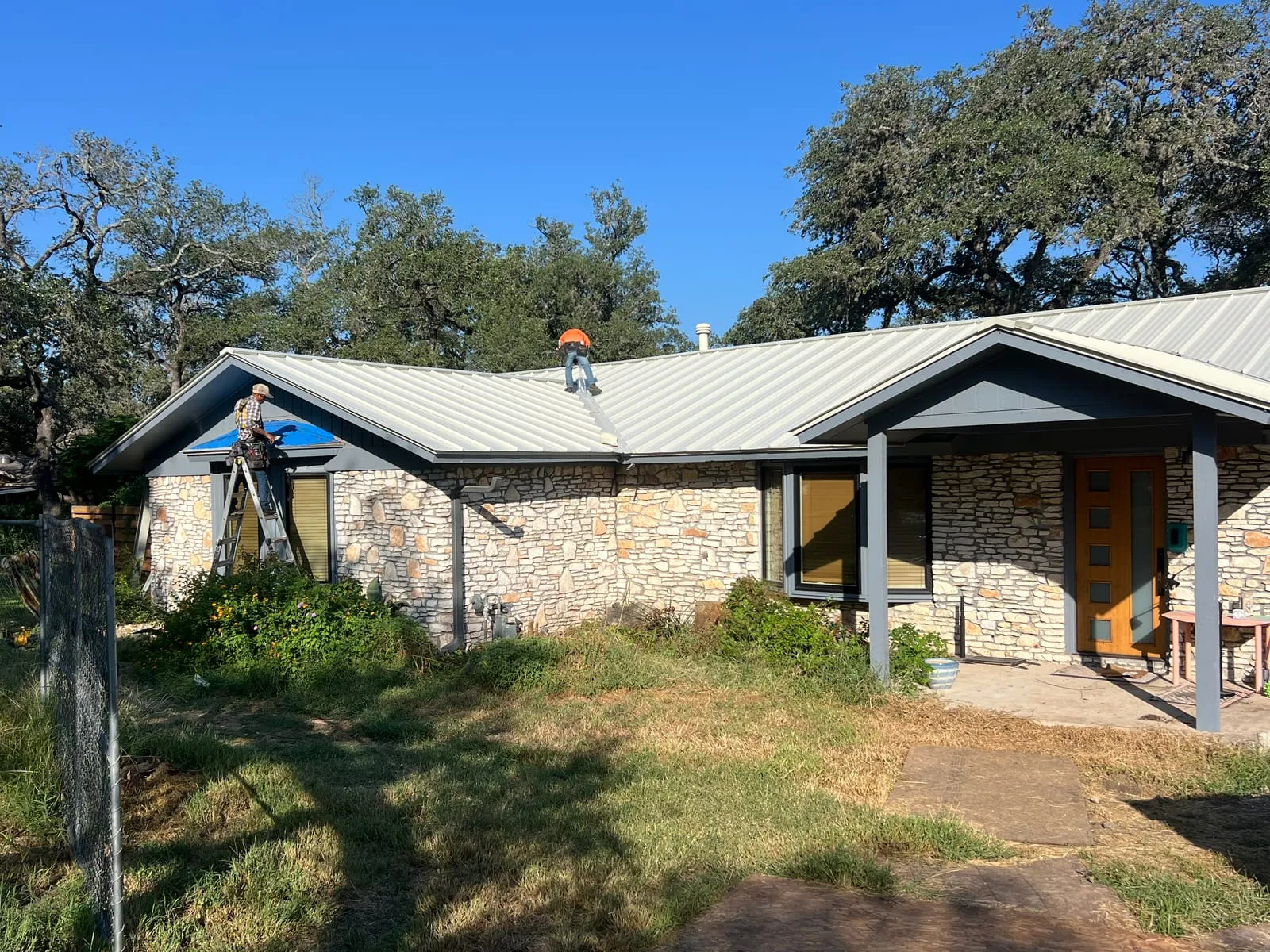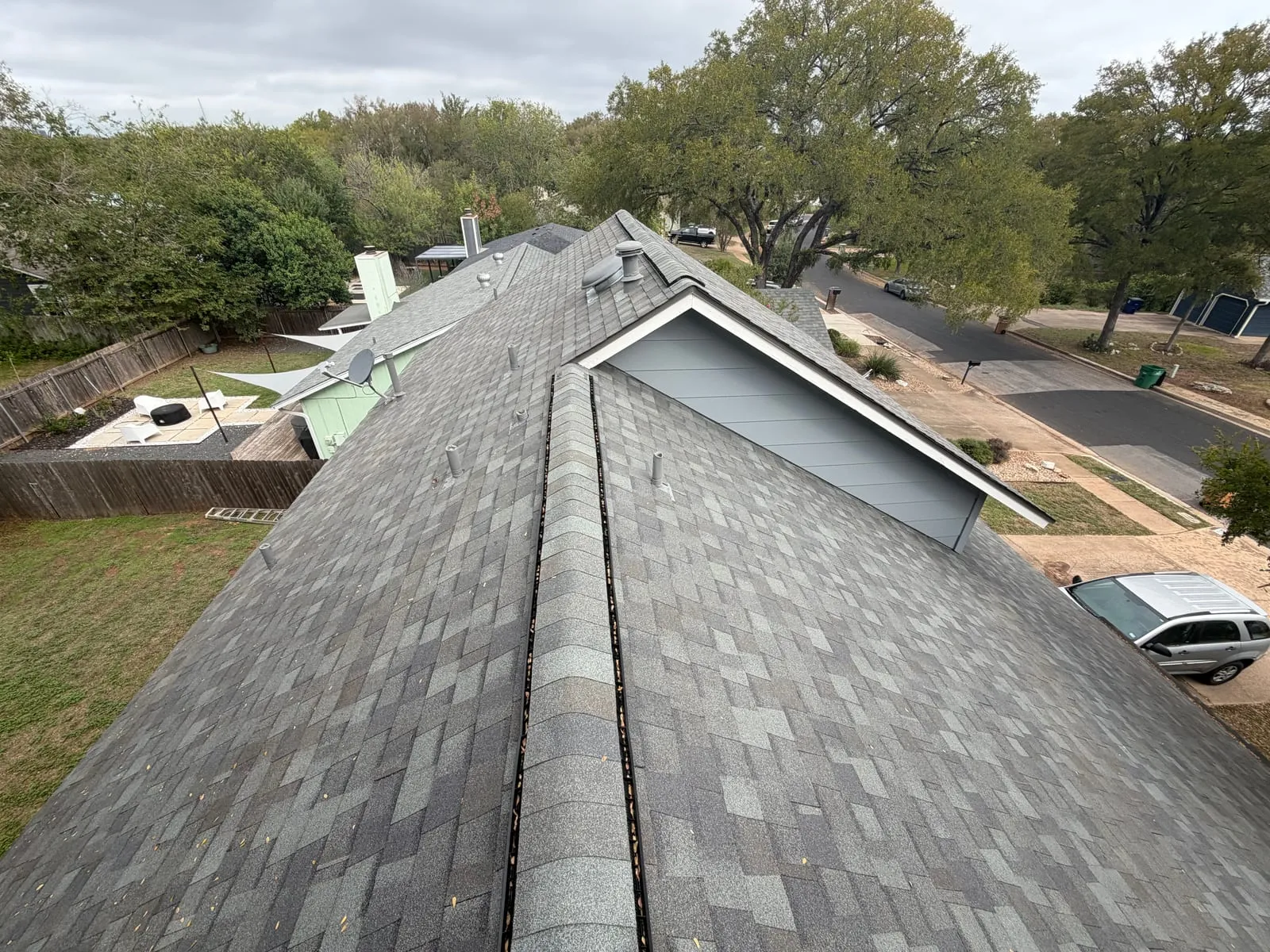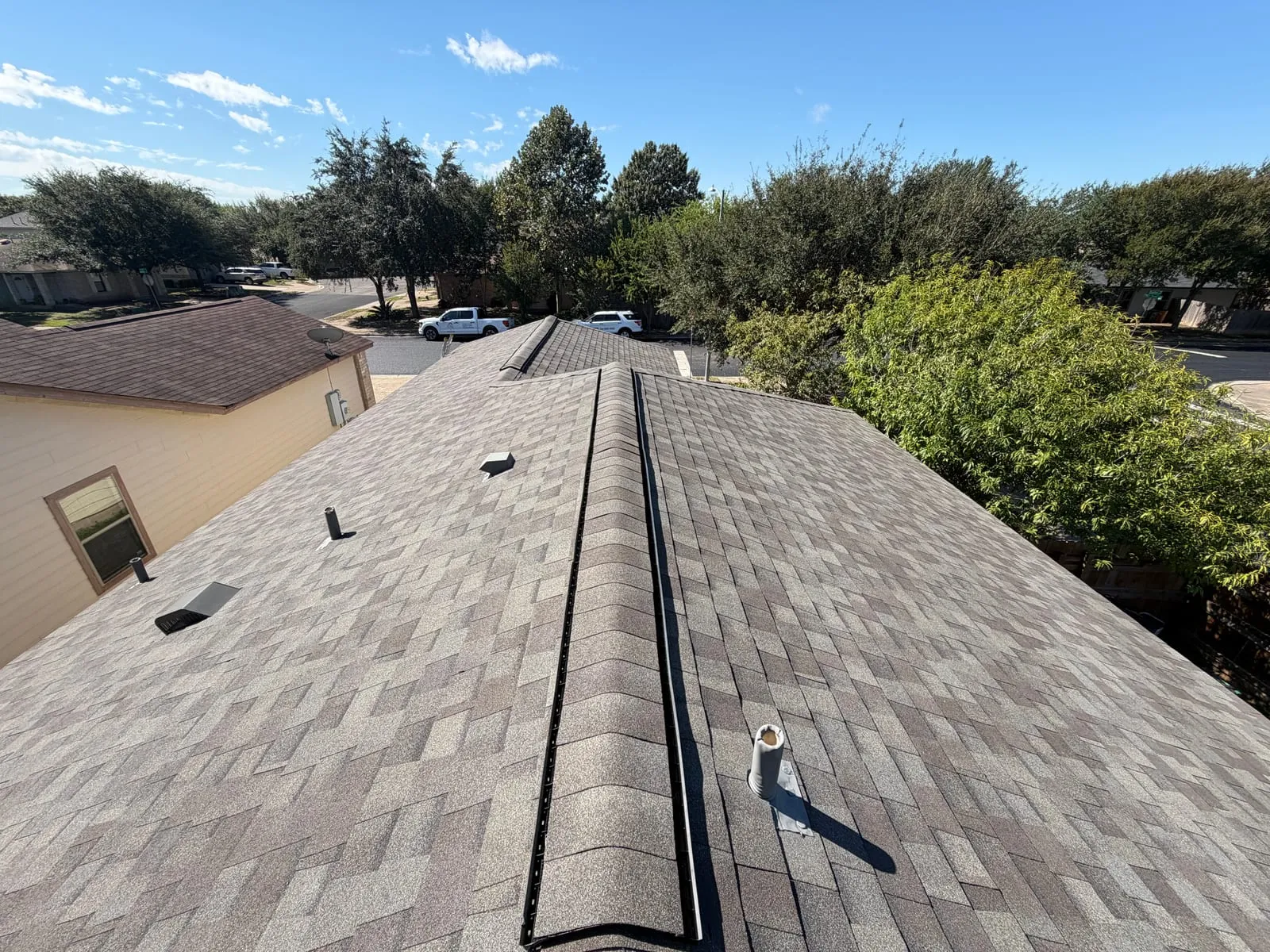
Short answer: Dripping Springs is young. About two-thirds of the housing inside city limits was built in 2010 or later, so many roofs here may still be the originals. That changes the questions. After hail, is a young roof worth repairing? When does the first replacement come due? And when it does, which upgrade is worth paying for?
If you’re looking for a roofer in Dripping Springs, TX, here’s how to answer those, and what to ask before anyone climbs on your roof.
How old are the homes in Dripping Springs?
Mostly built since 2010. According to the U.S. Census Bureau’s latest five-year survey, for housing inside Dripping Springs city limits:
- about half was built between 2010 and 2019
- about 1 in 7 was built in 2020 or later
- about 1 in 6 was built before 2000
Put that next to how long a shingle roof lasts here:
| Home built | Roof age in 2026 | If it’s the original roof |
|---|---|---|
| 2020 or later | 6 years or less | Repair, not replace, unless a storm hit it hard |
| 2016–2019 | 7–10 years | Usually repair, not replace |
| 2010–2015 | 11–16 years | Entering the replacement window |
| 2000–2009 | 17–26 years | At or past the end of its life |
A shingle roof realistically lasts about 15 to 20 years in Central Texas. Our guide to how long a roof lasts in Austin explains why shingles here rarely reach the age printed on the wrapper.
Some roofs have already been replaced after hail. If you’re not sure whether yours is original, check your closing documents or insurance records, or ask the previous owner.
Is your young roof damaged, or just aging?
On a newer home, the first question is whether it needs replacing at all.
- Under about 12 years old with damage in one spot? A lifted shingle, a failed pipe boot or a loose piece of flashing is a straightforward roof repair.
- Hail damage on several slopes? It may be an insurance claim, even on a young roof. Photograph everything before anyone touches the roof, and get an inspection before you call your insurer.
- No leaks, but it’s been through some storms? Hail can knock granules loose and crack shingles without causing a leak right away. An inspection tells you where you stand.
Read your paperwork first. Builder warranties and shingle manufacturer warranties vary, and some depend on registration or on who does the repair. Check yours before anyone works on the roof.
Our storm damage and insurance claim pages walk through what to do after a storm, and our insurance guide explains what a policy usually covers.
Signs your roof is due
Look for wear that’s spread across the roof, not in one spot.
- Granule loss. Bare, dark patches on the shingles, or granules piling up in the gutters and at the downspouts.
- Curling or cracking. Shingle edges lifting or cupping, or cracks across the tabs.
- Leaks in different places. One leak is a repair. Leaks that keep moving around mean the roof is failing.
- Storm damage on several slopes. After hail, damage on more than one side usually points to replacement.
- Age. If the roof is past 15 years, start planning even if it looks fine from the ground.
Our guide to signs of hail damage shows what to look for after a storm.
Repair or replace?
Roof age decides it, and how widespread the damage is breaks the tie.
Repair usually makes sense when the roof is under about 12 years old and the damage is in one area.
Replacement usually makes sense when:
- the roof is past 15 years
- granule loss is widespread
- leaks keep appearing in different spots
- a storm damaged several slopes
If you’re torn, our repair or replace guide goes through the decision step by step.
Planning your first replacement? Price the upgrade
For many Dripping Springs homeowners, the next roof will be the first one they choose themselves. The builder picked the original. This time, it’s worth pricing more than one option.
Impact-resistant shingles. These are built to take hail better than standard shingles, and the top rating is Class 4.
- Insurance credit. The Texas Department of Insurance says each insurer sets its own discount for impact-resistant roofing, and a Class 4 roof covering receives the highest credit.
- Fewer claims. A roof that holds up to a moderate hailstorm means fewer deductibles out of your pocket.
- They look the same. Most impact-rated architectural shingles look just like standard ones from the street.
What to weigh:
- Upfront cost. Impact-rated shingles cost more than standard architectural shingles.
- The discount varies. Ask your insurer for the actual credit before you decide. Some offer a lot, some very little.
- Cosmetic damage exclusions. Some policies won’t pay for hail marks that don’t cause a leak. TDI’s standard version of that exclusion can only be added to a policy getting an impact-resistant credit, so the two can come together. Ask your insurer whether the credit comes with one.
Getting the credit: after installation, your roofer can fill out TDI form PC068, or your insurer’s own form if it uses one. Send it to your insurer and keep the shingle packaging label your roofer gives you.
Metal. If you plan to stay a long time, metal is the other option. It lasts 60 years or more with proper maintenance and also comes in Class 4. Our metal vs. shingles guide compares the two.
What should a new roof include?
More than shingles. When you’re replacing a builder’s original roof, it’s the chance to fix whatever was skimped on the first time. A good estimate spells these out:
- Full tear-off. Taking the old roof off is the only way to see the decking underneath. A new roof also can’t go over one that’s water soaked, deteriorated, or already two layers thick.
- Decking. Rotten sheets found at tear-off are the most common change order. A good estimate prices them per sheet up front.
- Drip edge at the eaves and rake edges. This metal edge sends water into the gutter instead of behind the fascia.
- Wind-rated shingles. The shingle packaging should carry a wind rating label that fits the local design wind speed.
- New flashing and pipe boots, not the old ones reused. If a quote says “reuse existing flashing,” ask what condition it’s in.
- Ventilation. A hot, poorly vented attic cooks shingles from underneath and shortens their life.
Does your HOA have a say?
If your home is in an HOA, almost certainly. HOA architectural guidelines commonly cover shingle color and style, and some cover materials.
What Texas law says:
- An HOA can’t ban impact-resistant shingles. Texas Property Code § 202.011 bars an HOA from prohibiting shingles designed to be wind and hail resistant, energy efficient, or solar.
- There are conditions. The shingles must resemble those allowed in the subdivision, be more durable and of equal or better quality, and match the surrounding homes.
- The protection covers shingles. Switching to metal or tile is still up to your HOA’s rules.
The order that saves you grief:
- Pick the material and the exact color name with your roofer.
- Submit it to your HOA’s architectural committee before scheduling the work.
- Get the approval in writing and keep it.
If you’re working an insurance claim, start the HOA paperwork early. Claim deadlines don’t wait for committee meetings.
What does a new roof cost in Dripping Springs?
About the same as the rest of the Austin metro. In 2026 most homeowners replacing an architectural shingle roof on a typical 2,000 square foot home land in roughly the $12,000 to $18,000 range.
What moves your number:
- Pitch and complexity. Steep roofs, dormers and multiple valleys take longer and need more flashing.
- Decking. How much needs replacing at tear-off.
- Material. Impact-rated shingles and metal cost more up front, and may earn back part of the difference through your premium.
Our Austin roof replacement cost guide breaks the ranges down by material.
How do you pick a roofer in Dripping Springs?
Look for one who’ll tell you the truth about a young roof. On a newer home, a good roofer will tell you when a repair is all you need. When it is time to replace, they’ll price standard and impact-rated shingles side by side and explain how to get the insurance credit.
Also check:
- A local address and past jobs nearby you can look at
- Liability insurance and workers’ compensation. Ask for the certificates.
- A written scope covering materials, underlayment, drip edge, flashing, ventilation, decking price and cleanup
- Warranty terms that separate the manufacturer’s material warranty from the roofer’s workmanship warranty
- No deductible games. On an insurance-paid roof, Texas law makes it an offense for a contractor to promise to pay, waive or rebate your deductible without the insurer’s consent.
Our guide to choosing a roofing contractor goes further.
Thinking about your Dripping Springs roof?
The useful first step is knowing what shape your roof is in. Schedule your free roof inspection and we’ll document the condition and tell you straight whether it’s a repair or a replacement. If it’s a replacement, we’ll price impact-resistant and metal options and walk you through the HOA side before anything gets ordered.
See our Dripping Springs service area for everything we handle locally, or all of our service areas.
Sutton Roofing is a roofer serving Dripping Springs, Austin, and Central Texas, helping local homeowners with roof repair, replacement, and storm damage.