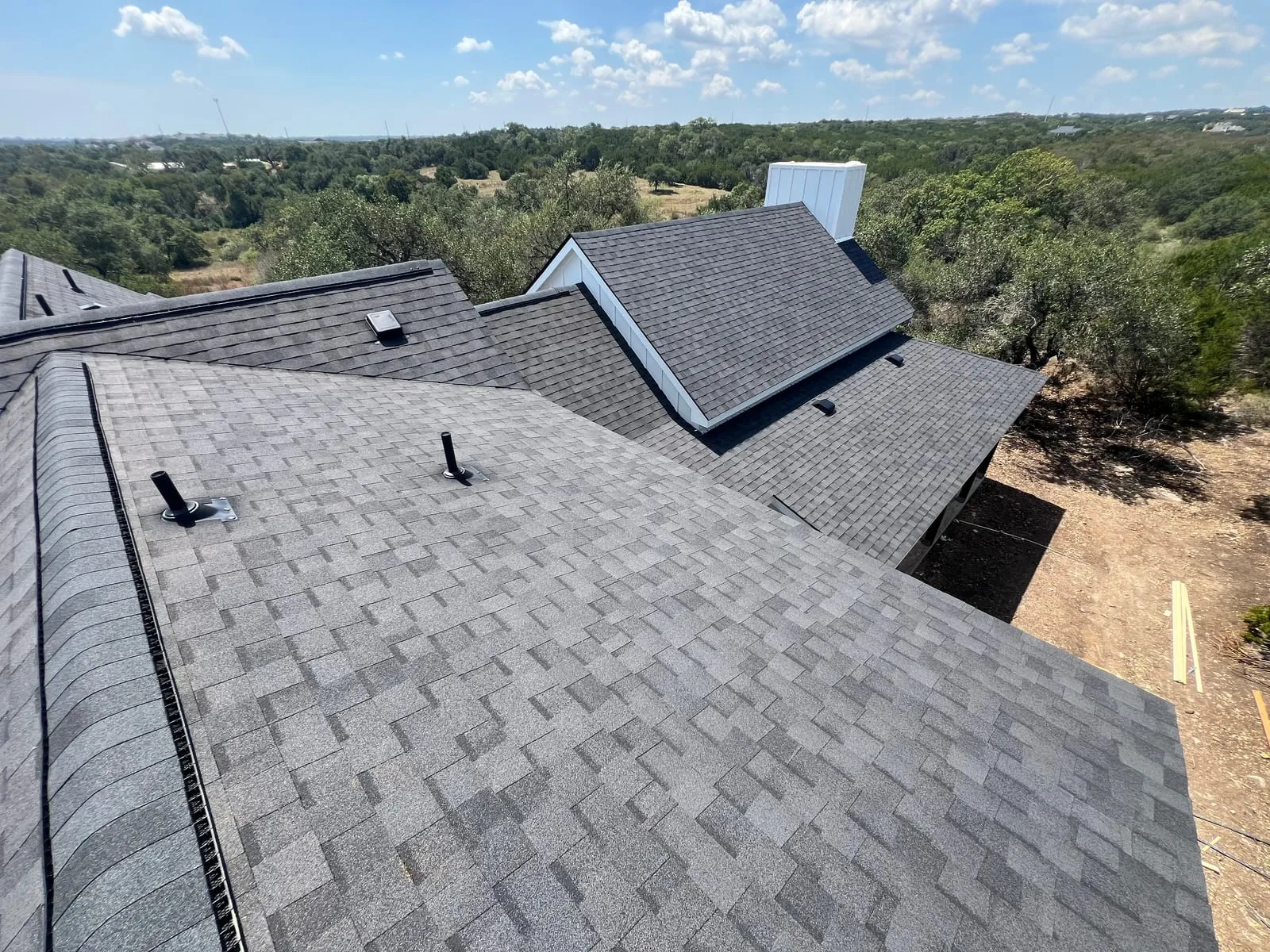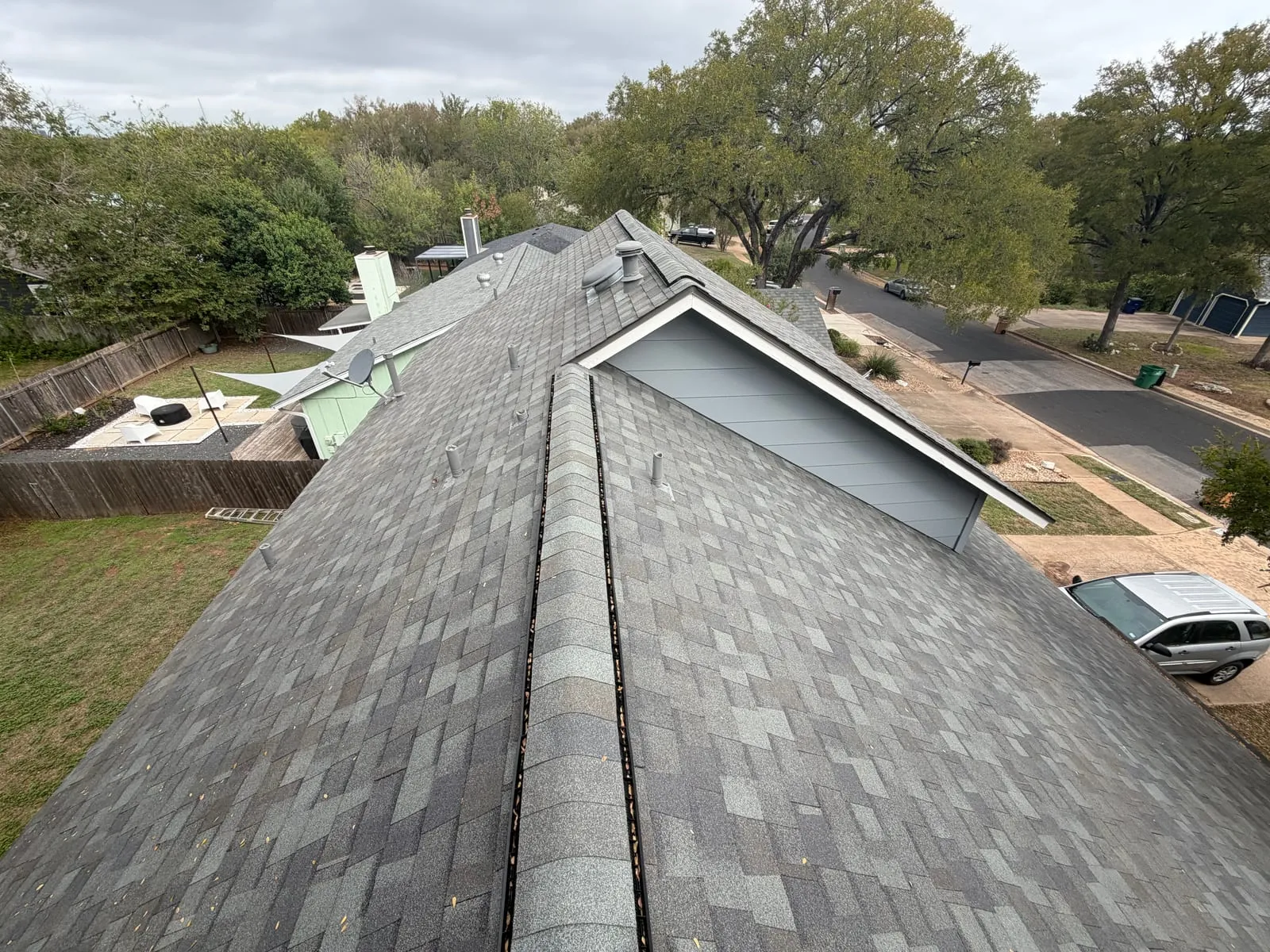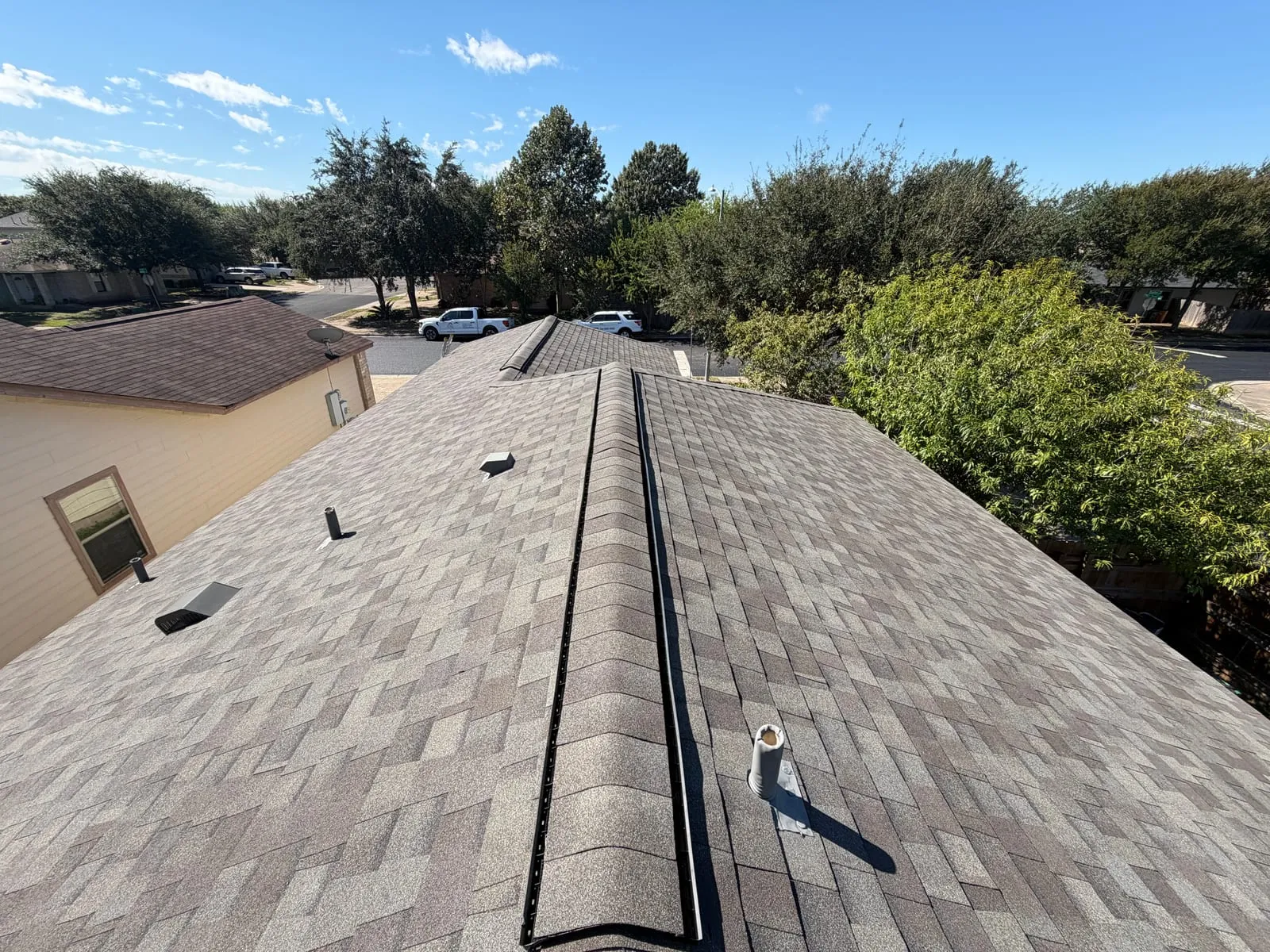
Short answer: Lakeway and Bee Cave are neighbors in western Travis County, but their homes are different ages, and that changes the roof conversation.
- Lakeway: about 4 in 10 homes were built before 2000. Many are likely on a second or third roof, so the job is about what’s underneath.
- Bee Cave: about 6 in 10 homes were built in 2010 or later. Many owners are facing their first replacement, or hail damage on a young roof.
In both, material choice and HOA approval are worth sorting out early.
If you’re looking for a roofer in Lakeway or Bee Cave, TX, here’s what to check, what a good replacement includes, and what it costs.
How old are the homes in Lakeway and Bee Cave?
Lakeway is older. Bee Cave is newer. According to the U.S. Census Bureau’s latest five-year survey:
- Lakeway: about 4 in 10 homes were built before 2000, and nearly 3 in 10 before 1990. About a quarter went up between 2000 and 2009.
- Bee Cave: about 6 in 10 homes were built in 2010 or later, more than a quarter between 2000 and 2009, and only roughly 1 in 8 before 2000.
Put that next to roof life. A shingle roof realistically lasts about 15 to 20 years in Central Texas:
| Home built | Roof age in 2027 | If it’s the original shingle roof |
|---|---|---|
| Before 2000 | 28+ years | Almost certainly replaced at least once |
| 2000–2009 | 18–27 years | At or past the end of its life |
| 2010–2015 | 12–17 years | Entering the replacement window |
| 2016 or later | 11 years or less | Usually repair, not replace |
Some roofs here have already been replaced after hail. If you’re not sure whether yours is original, check your closing documents or insurance records. Our guide to how long a roof lasts in Austin explains why shingles rarely reach the age on the wrapper.
Replacing a roof on an older Lakeway home
The shingles are the easy part. Check what’s underneath. A home built in the 1970s or 1980s may be on its second or third roof, and each one leaves its history behind.
What to look at:
- Layers. Some older roofs were re-covered instead of torn off. A new roof can’t go over one that already has two layers, so a full tear-off is needed.
- Decking. Older decking is more likely to have soft or rotted sheets. They only show up once the old roof comes off, so ask for decking priced per sheet in the estimate.
- Ventilation. Older attics often have too little airflow. A hot attic cooks shingles from underneath and raises cooling bills. Replacement is the time to fix it.
- Flashing. Rusted or cracked flashing around chimneys, walls and skylights should be replaced, not reused.
- An existing tile roof. A new roof can’t go over clay or concrete tile. If you’re leaving tile, it all comes off first.
About a quarter of Lakeway’s housing went up in the 2000s. If yours did and still has its original roof, it’s 18 to 27 years in, and it’s time for an inspection.
Roofs on newer Bee Cave homes
On a young roof, start by asking whether it needs replacing at all.
- Under about 12 years old with damage in one spot? That’s usually a roof repair, not a replacement.
- Hail damage on several slopes? It may be an insurance claim. Photograph everything before anyone touches the roof, and get an inspection before you call your insurer. Our insurance guide walks through it.
- Built in the 2000s? That’s more than a quarter of Bee Cave’s housing. If it still has the original roof, it’s at or past a realistic shingle life.
- Built in the early 2010s? It’s entering the 15-year window. Start planning, even if it looks fine from the ground.
Read your paperwork. Builder warranties and shingle manufacturer warranties vary, and some depend on registration or on who does the repair. Check yours before anyone works on the roof.
Complex roofs
If your roof has a lot going on, the details matter more. Not every home has a simple two-slope roof. If yours has any of these, expect them to shape the estimate:
- Several planes and valleys. Every valley is a place water collects. Each one needs proper underlayment and flashing.
- Steep pitch. Steeper roofs take longer and need more safety setup, which shows up in labor.
- Walls, chimneys and skylights. Every spot where the roof meets something else needs flashing done right. These are common leak spots.
- Mixed materials. A tile main roof with a metal porch, or shingles with a low-slope section, means more than one system on one house.
A good roofer will inspect the whole roof up close before quoting. Be wary of a number given from the driveway.
Shingles, metal or tile?
All three are options, and each has a different cost and lifespan.
- Impact-rated shingles. They cost more than standard architectural shingles and hold up better against hail. The Texas Department of Insurance says each insurer sets its own discount for impact-resistant roofing, and a Class 4 roof covering receives the highest credit.
- Standing seam metal. Lasts 60 years or more with proper maintenance, and comes in Class 4 too. It costs more up front. If you plan to stay a long time, the math can favor it.
- Stone-coated steel. Steel shaped to look like shingle, shake or tile. It costs more than standing seam or shingles.
- Tile. Clay or concrete tile can last 50 years or more. The underlayment beneath it wears out sooner and needs attention around the 20 to 25 year mark. Tile is heavy, so switching to it may need a structural check first.
Getting the insurance credit: after installation, your roofer can fill out TDI form PC068, or your insurer’s own form if it uses one. Ask your insurer for the actual credit before you decide. Some offer a lot, some very little.
Our metal vs. shingles guide compares the two most common options in more detail.
Does your HOA need to approve the new roof?
If your home is in an HOA or property owners’ association, almost certainly. HOA architectural guidelines commonly cover roofing.
Depending on the neighborhood, the rules may cover:
- shingle color, often from an approved list
- shingle profile or style
- whether metal, tile or other materials are allowed
One protection worth knowing: Texas Property Code § 202.011 bars HOAs from prohibiting wind- and hail-resistant shingles, as long as they resemble the shingles in the subdivision, are more durable and of equal or better quality, and match the surrounding homes. That covers impact-rated shingles. It doesn’t guarantee approval for a switch to standing-seam metal or tile.
The order that saves you grief:
- Pick the material and the exact color name with your roofer.
- Submit it to your HOA’s architectural committee before scheduling the work.
- Get the approval in writing and keep it.
If you’re working an insurance claim, start the HOA paperwork early. Claim deadlines don’t wait for committee meetings.
Repair or replace?
Roof age decides it, and how widespread the damage is breaks the tie.
Repair usually makes sense when the roof is under about 12 years old and the damage is in one area, like a lifted shingle, a failed pipe boot or loose flashing.
Replacement usually makes sense when:
- the roof is past 15 years
- granule loss is widespread
- leaks keep appearing in different spots
- a storm damaged several slopes
Our repair or replace guide goes deeper, and our storm damage and insurance claim pages cover what to do after a storm.
What should a new roof include?
A good estimate spells these out:
- Full tear-off. It’s the only way to see the decking. A new roof also can’t go over one that’s water soaked, deteriorated, or already two layers thick.
- Decking. Rotten sheets found at tear-off are the most common change order. A good estimate prices them per sheet up front.
- Drip edge at the eaves and rake edges on a shingle roof. It keeps water off the fascia, and it’s an easy thing for a cut-rate crew to skip.
- Underlayment and flashing installed to the code and the manufacturer’s instructions, with extra care in the valleys.
- Ventilation that matches the attic.
What does a new roof cost in Lakeway or Bee Cave?
The pricing tracks the rest of the Austin metro. In 2026 most homeowners replacing an architectural shingle roof on a typical 2,000 square foot home land in roughly the $12,000 to $18,000 range.
What moves your number:
- Size. A bigger house usually means more roof, and a higher total.
- Pitch and complexity. Steep roofs, dormers and multiple valleys take longer and need more flashing.
- Decking. Rotten sheets found at tear-off add cost, and they’re more likely on older homes.
- Material. Impact-rated shingles, metal and tile cost more up front.
Our Austin roof replacement cost guide breaks the ranges down by material.
How do you pick a roofer in Lakeway or Bee Cave?
Ask what they’ll check before they quote. On an older Lakeway home, a good roofer asks about layers and decking. On a newer Bee Cave home, they’ll tell you honestly if a repair will do. On either, they should price more than one material if you’re open to it.
Also check:
- A local address and past jobs nearby you can look at
- Liability insurance and workers’ compensation. Ask for the certificates.
- Experience with your material. Metal and tile take different skills than shingles. Ask to see past jobs in the material you’re choosing.
- A written scope covering materials, underlayment, flashing, drip edge, ventilation, decking price and cleanup
- Warranty terms that separate the manufacturer’s material warranty from the roofer’s workmanship warranty
- No deductible games. In Texas it’s illegal for a contractor to pay, waive or rebate your deductible on an insurance-paid roof without your insurer’s consent.
Our guide to choosing a roofing contractor goes further.
Thinking about your Lakeway or Bee Cave roof?
The useful first step is knowing what shape your roof is in. Schedule your free roof inspection and we’ll document the condition and tell you straight whether it’s a repair or a replacement. If it’s a replacement, we’ll price the materials you’re considering and walk you through the HOA side before anything gets ordered.
See our Lakeway and Bee Cave service area pages for everything we handle locally.
Sutton Roofing is a roofer serving Lakeway, Bee Cave, Austin, and Central Texas, helping local homeowners with roof repair, replacement, and storm damage.