Short answer: In Austin, an architectural shingle roof costs less up front (most homes land around $12,000 to $18,000) and lasts about 15 to 20 years. A metal roof commonly costs around twice as much but lasts 60 years or more with proper maintenance. Both come in Class 4 hail ratings. If you’re staying in the house for the long haul, metal usually wins on cost per year. If you might sell within ten years, a good impact-rated shingle usually makes more sense.
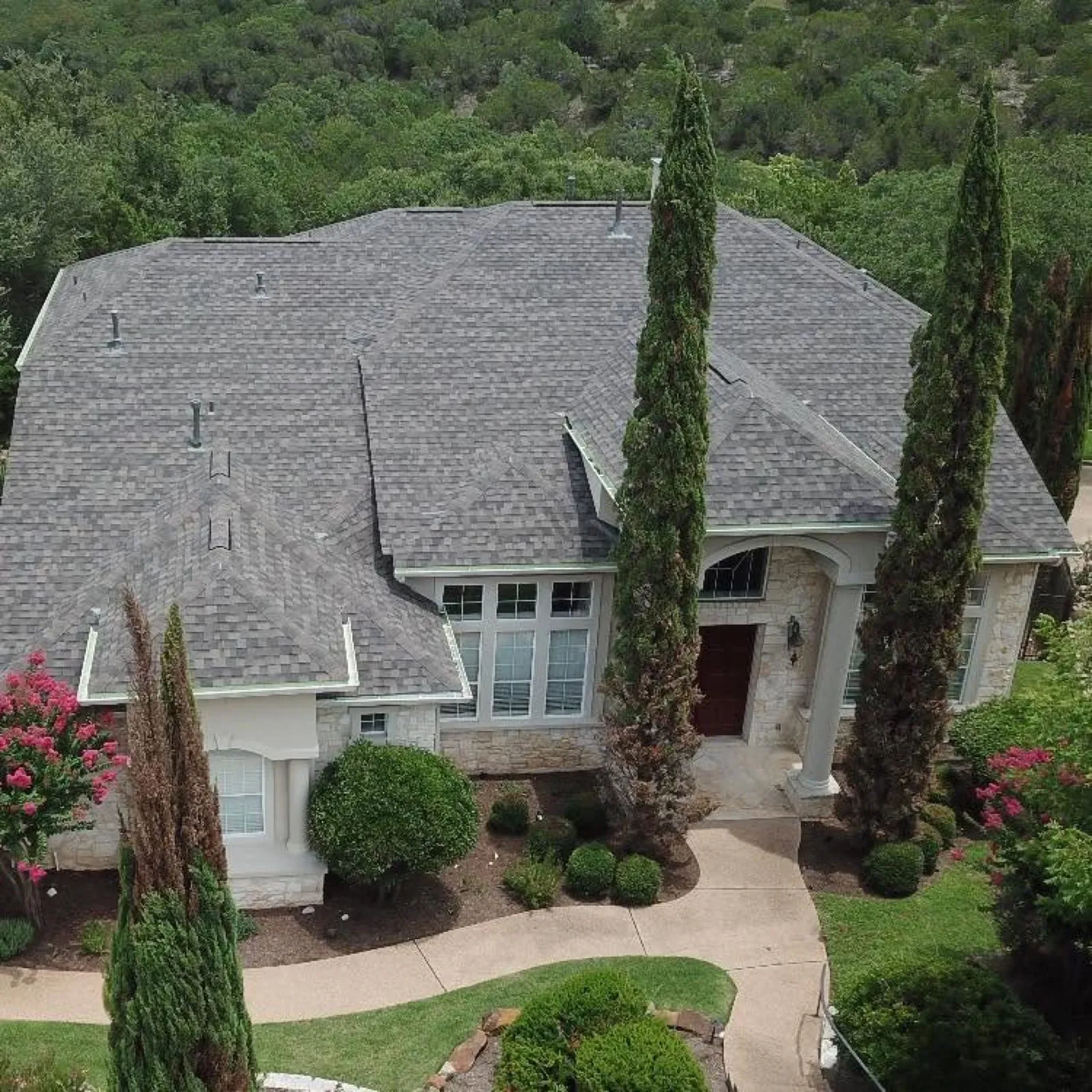
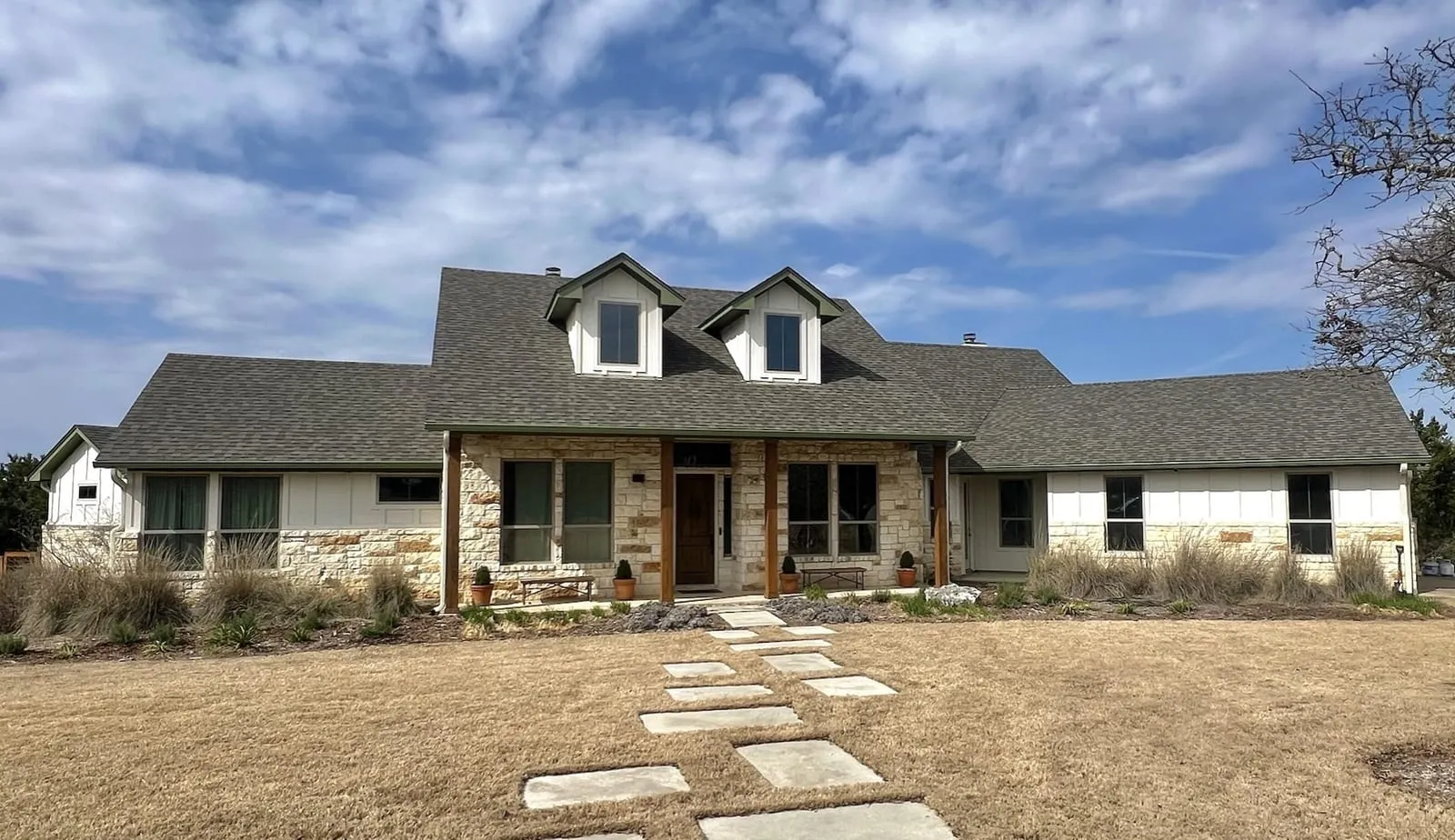
Walk any Austin neighborhood and you’ll see the question being answered both ways, sometimes on the same house. We re-roofed a Tarrytown home with shingles on the upper roof and standing seam metal on the lower one.
Neither material is the “right” answer for every home. Here’s how they actually compare in Central Texas heat, hail and HOA rules.
What’s the difference between a metal roof and a shingle roof?
Shingles are layered asphalt pieces, and a metal roof is steel or aluminum panels. Within each, there are a few options Austin homeowners usually weigh:
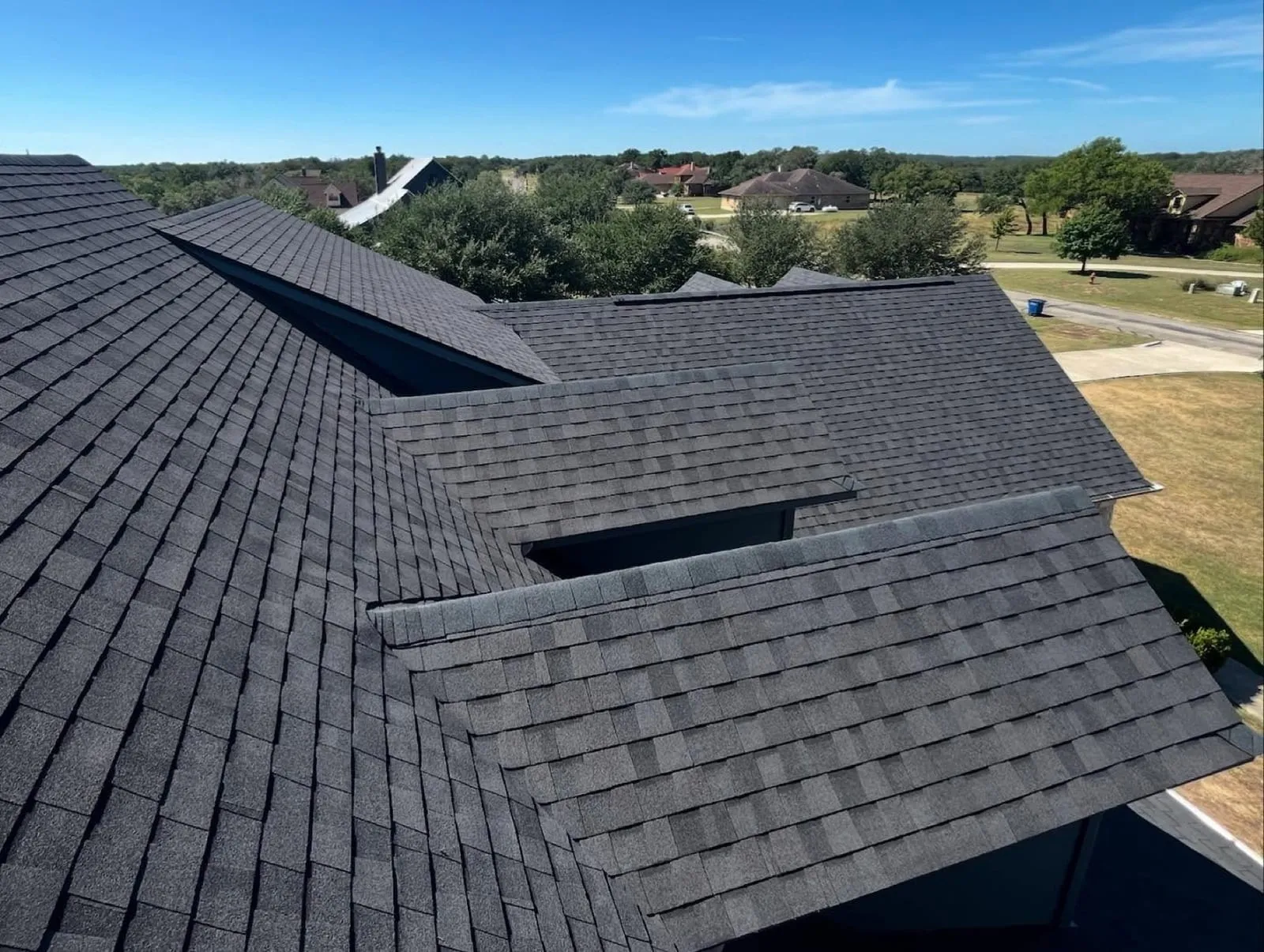
- Architectural asphalt shingles. The Central Texas default. Layered for a dimensional look, and available in impact-rated (Class 3 and Class 4) versions.
- Standing seam metal. Long vertical panels with raised seams and no exposed fasteners anywhere on the roof. The clean modern look you see on new Hill Country builds.
- Stone-coated steel. Steel panels with a textured stone-chip finish, pressed to look like shingles, shake or tile. It gives you metal’s durability without the metal look, but it’s the most expensive of these three options and one of the priciest roofing materials on the market.
How much does a metal roof cost compared to shingles in Austin?
Metal costs more up front, commonly around double an architectural shingle roof, and sometimes more.
For a typical 2,000 square foot home, most Austin homeowners spend about $12,000 to $18,000 on architectural shingles in 2026. Standing seam and stone-coated steel on the same house run well above that, and stone-coated steel is the most expensive of the three.
What pushes a metal quote up:
- Panel gauge and finish. Heavier gauges and premium paint systems cost more.
- Roof shape. Every hip, valley and dormer needs custom-cut panels and trim. Metal is most affordable on simple, open roof planes.
- Tear-off and decking. The same as with shingles. Rotten decking found under the old roof adds cost either way.
Our Austin roof replacement cost guide breaks down the shingle side in detail.
Which roof lasts longer in Texas?
Metal, by a wide margin. In Central Texas, architectural shingles realistically last 15 to 20 years. A well-installed metal roof lasts 60 years or more with proper maintenance.
Shingles age faster here than the wrapper suggests. Heat, UV and hail break down the asphalt and knock off the protective granules. Metal doesn’t have that problem. The paint finish is the part that ages, and quality finishes carry long manufacturer warranties.
That’s where the cost math turns. If metal costs twice as much but lasts three times as long or more, it’s the cheaper roof per year, as long as you’re the one living under it for those years. Over the life of a building, metal is the least expensive roof covering you can put on it, and shingles are the most expensive, because you pay for a new shingle roof every couple of decades. Our guide to how long a roof lasts in Austin has the full lifespan table.
Does a metal roof really keep a house cooler?
It can, but the color and coating do the work, not the metal.
What cools a roof is reflectivity, meaning how much sunlight bounces off instead of soaking in. Lawrence Berkeley National Laboratory found a cool-colored roof that reflects 35% of sunlight stays about 22°F cooler on a summer afternoon than a same-looking roof that reflects only 10%.
In practice:
- Painted metal with cool pigments reflects a lot of sunlight and holds that finish for decades. This is metal’s real heat advantage.
- Cool-rated shingles also exist and help. Standard dark shingles are the hottest option.
- Lighter colors beat darker ones on either material.
How much you’ll save: the Cool Roof Rating Council puts the average at 7 to 15 percent of cooling costs. Your attic ventilation and insulation matter as much as the roof surface. If your upstairs is hot, fix those at the same time, whichever roof you choose.
Which handles Texas hail better?
Both come in Class 4 impact ratings, but they fail differently.
Metal rarely leaks after hail. Big hail can dent it, though, especially smooth standing seam panels. The textured finish on stone-coated steel hides small dents far better.
Impact-rated shingles don’t dent. A severe storm can still crack them or knock granules loose, and over a lifetime of storms they get replaced more often.
Two insurance details to know before you choose:
- Cosmetic damage exclusions. Some Texas policies won’t pay for dents that don’t cause a leak. This matters most for metal. Our Texas roof insurance guide explains how to check your policy.
- Impact-resistant discounts. Per the Texas Department of Insurance, each insurer sets its own discount, and a Class 4 roof covering gets the highest credit. Metal panels can qualify. Ask your roofer to complete TDI form PC068 after installation (some insurers use their own form instead). Keep the original, send your insurer a copy, and hang on to a label from the product packaging.
- The two are often linked. Some insurers attach a cosmetic damage exclusion as a condition of the impact-resistant discount. Ask your agent whether taking one means accepting the other.
Hail is part of life in Central Texas. Our guide to signs of hail damage covers what to look for after a storm.
Will my HOA allow a metal roof?
Check first, because Texas law protects upgraded shingles, not metal.
Under Texas Property Code § 202.011, an HOA can’t prohibit shingles designed to be wind and hail resistant, more energy efficient, or solar-generating, provided they resemble the shingles allowed in the neighborhood, are more durable and of equal or better quality, and match the look of the surrounding properties.
That protection is written for shingles. Switching to metal is a material change, and plenty of Austin-area HOAs restrict it or allow only certain styles and colors. Stone-coated steel that mimics shingles or shake is sometimes easier to get approved than standing seam.
Submit the exact product and color to your HOA and get approval in writing before anything is ordered.
So which one should you choose?
How long you’ll stay in the house decides most of it.
Metal usually makes sense if:
- you plan to stay 15 years or more
- you want this to be the last roof you pay for
- your roof has simple, open planes
- your HOA allows it
Impact-rated shingles usually make sense if:
- you might sell within about ten years
- your budget is the deciding factor today
- your roof is cut up with hips, valleys and dormers
- your HOA restricts metal
Either way, choose an impact rating that your insurer recognizes. The installation matters as much as the material, including the underlayment, flashing and ventilation.
Not sure which is right for your home?
We install shingles, standing seam and stone-coated steel, so we don’t have a reason to push you toward one. Schedule your free roof inspection and we’ll look at your roof’s shape, age and condition, and price both options side by side.
See our roof replacement page for how the process works.
Sutton Roofing is a family-owned roofer serving Austin and Central Texas, helping local homeowners with roof repair, replacement, and storm damage since 1979.