Quick answer: In 2026, most Austin homeowners spend somewhere in the $12,000–$18,000 range for a full residential roof replacement with quality architectural asphalt shingles — the most popular choice in Central Texas. Simpler, smaller roofs can start lower, and larger or more complex homes run higher. What decides where your roof lands is its size, pitch and complexity, the material you choose, the condition of the decking underneath, and whether storm damage is covered by insurance.
A new roof is one of the largest investments you’ll make in your home, and in Austin it’s also one of the most important. Between spring hail, triple-digit summers, and sudden thunderstorms, Central Texas roofs take a beating year after year. Knowing what actually drives the price helps you budget with confidence, compare estimates fairly, and spot a quote that’s too good to be true.
This guide covers residential roofs. Commercial and low-slope roofing is priced on a completely different basis — see our commercial roofing page for that. For homeowners, here’s an honest look at what shapes the number and how to make sure you’re getting real value, not just the lowest bid.
What determines what your roof will cost?
Before any range means anything, it helps to understand why two Austin homes can get very different quotes. These are the factors that move the number most — and the reason a higher estimate often reflects a bigger or more demanding roof, not overpricing:
- Roof size. The single biggest driver, and here’s the catch most homeowners miss: your roof is bigger than your house. Because of slope and overhangs, roof area typically runs 10–20% larger than your home’s floor plan. A 2,000-square-foot home often has 2,200–2,500 square feet of actual roof to cover.
- Pitch and complexity. A steep roof requires safety equipment and slows a crew down. Every valley, dormer, chimney, skylight, and hip adds cuts, flashing, and labor hours. Two homes of identical size can differ by thousands on complexity alone.
- Material. Architectural shingles are the Central Texas default. Impact-resistant, metal, and tile all cost more up front — sometimes considerably — but change the lifespan and insurance math.
- Decking condition. Once the old roof comes off, rotted or damaged decking has to be replaced. Reputable roofers can’t know this until tear-off, which is why a good estimate says how decking replacement will be priced rather than pretending it won’t happen.
- Insurance. If a hailstorm damaged your roof, your out-of-pocket cost may be limited to your deductible. That single factor changes the number more than any other on this list.
What is the average residential roof replacement cost in Austin?
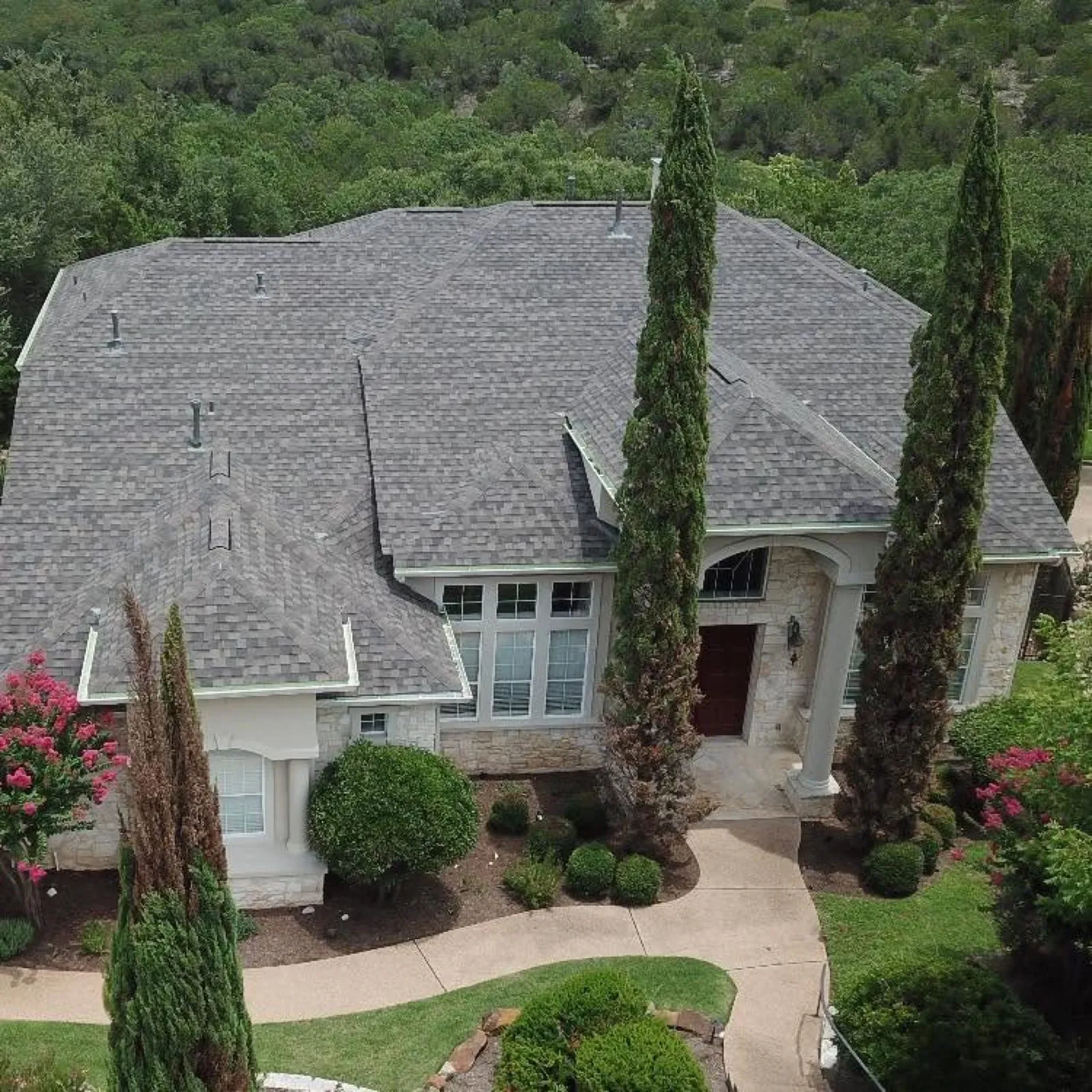
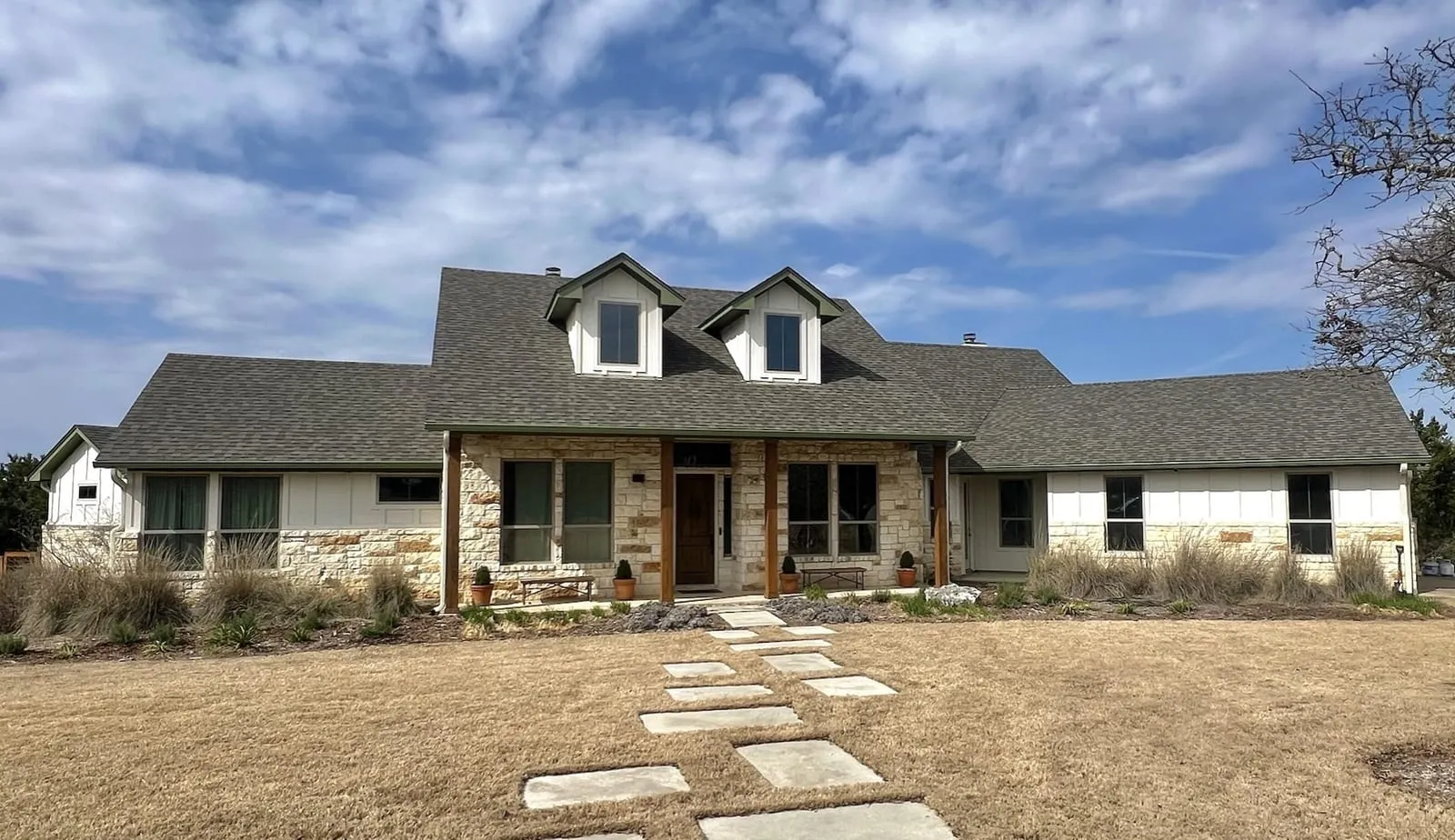
For most Austin homes, a complete architectural asphalt shingle replacement lands in the $12,000 to $18,000 range in 2026. Smaller, simpler roofs can come in under that; large homes, steep pitches, and premium materials push above it.
Be cautious with any quote that comes in dramatically below the market. Roofing is a labor-and-materials business with very little room for magic. A bid that undercuts everyone else usually means thinner materials, an unpermitted job, a crew that isn’t properly insured, or line items that reappear as change orders once the tear-off begins.
How does material choice change the price?
Material is where homeowners have the most control over the final number.
- Architectural asphalt shingles — the baseline for Central Texas. Good balance of cost, appearance, and a typical 25–30 year lifespan.
- Impact-resistant (Class 4) shingles — more up front, but built to withstand hail. Many Texas insurers offer a premium discount for them, which can offset a meaningful share of the difference over the life of the roof.
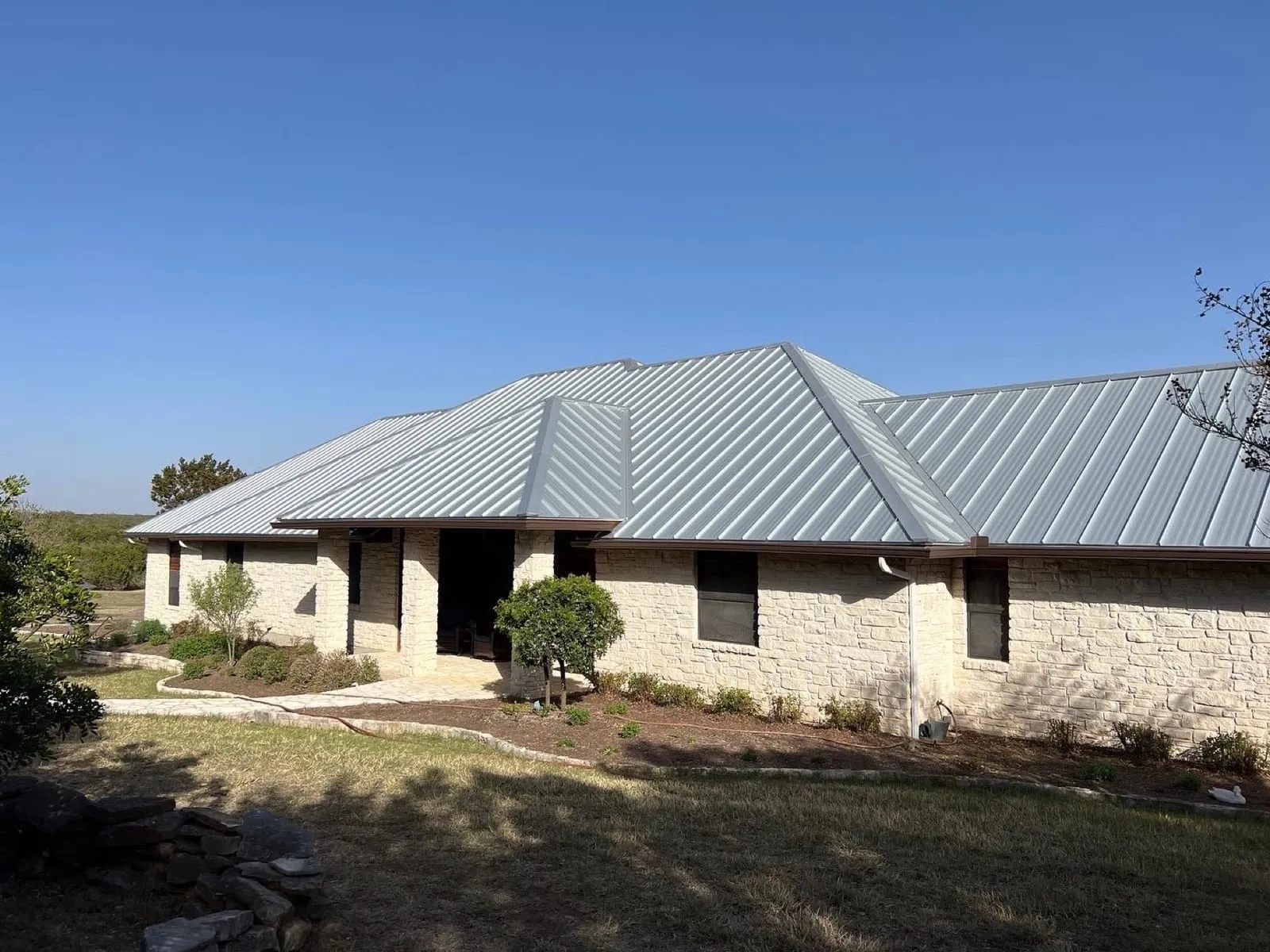
- Metal — a significant step up in cost, with a 40–70 year lifespan, excellent heat reflectivity for Austin summers, and strong hail performance.
- Tile and slate — the premium end, common on specific architectural styles. Heavy enough that some homes need structural evaluation first.
In a hail market like ours, the impact-resistant question is worth asking your roofer and your insurance agent before you decide. Sometimes the more expensive roof is the cheaper roof.
Why is roof replacement more expensive in Austin?
Austin runs meaningfully above the Texas average. Strong construction demand, a competitive labor market, and a limited pool of skilled crews all push costs up. Prices also spike temporarily in the weeks following a major hail event, when demand surges across the metro at once.
That’s also when out-of-town storm chasers arrive. They quote aggressively, work fast, and are gone before any warranty gets tested. A local company that will still be here in five years is part of what you’re paying for.
Will insurance cover a roof replacement?
Often, yes — if the damage came from a covered event like hail or wind. Texas homeowners policies typically cover storm damage, though your out-of-pocket cost depends on your deductible and whether your policy pays replacement cost value (RCV) or actual cash value (ACV). RCV policies pay what it costs to replace the roof today; ACV policies subtract depreciation for the roof’s age, which can leave a large gap.
Normal wear, age, and deferred maintenance aren’t covered. If a recent storm may have damaged your roof, a professional inspection documenting the damage is the right first step — before you call your insurer, not after. Our guide to spotting hail damage covers what to look for.
Is a more expensive roof worth it?
Often, yes. Higher-quality materials and a skilled, properly insured installer typically mean a longer-lasting roof and fewer repairs. A cheap roof installed poorly can fail early and cost more over its life than a well-installed one would have cost up front.
When you compare estimates, look past the bottom-line number at what’s actually included: tear-off of the old roof, decking inspection and replacement terms, underlayment and ventilation, the specific shingle line, cleanup and disposal, permit handling, and the workmanship warranty. Two quotes are only comparable when they cover the same scope.
Should you repair or replace?
It depends on the roof’s age and how widespread the damage is. Isolated damage on a younger roof is usually a good candidate for roof repair. Widespread issues, or damage on a roof approaching the end of its lifespan, generally make replacement the better long-term value — patching a 22-year-old roof rarely pays off.
A professional inspection is the only reliable way to know which side of that line you’re on.
Get a straight answer on what your roof will cost
Every roof — and every quote — is different. The best first step is an honest, in-person assessment from a local roofer who knows Austin’s climate, codes, and insurance realities. Sutton Roofing provides clear, written estimates with no pressure and no surprises.
Request your free roof estimate today.
Sutton Roofing is a locally owned, Austin-based roofing contractor specializing in roof replacement, storm damage repair, and inspections across Central Texas.