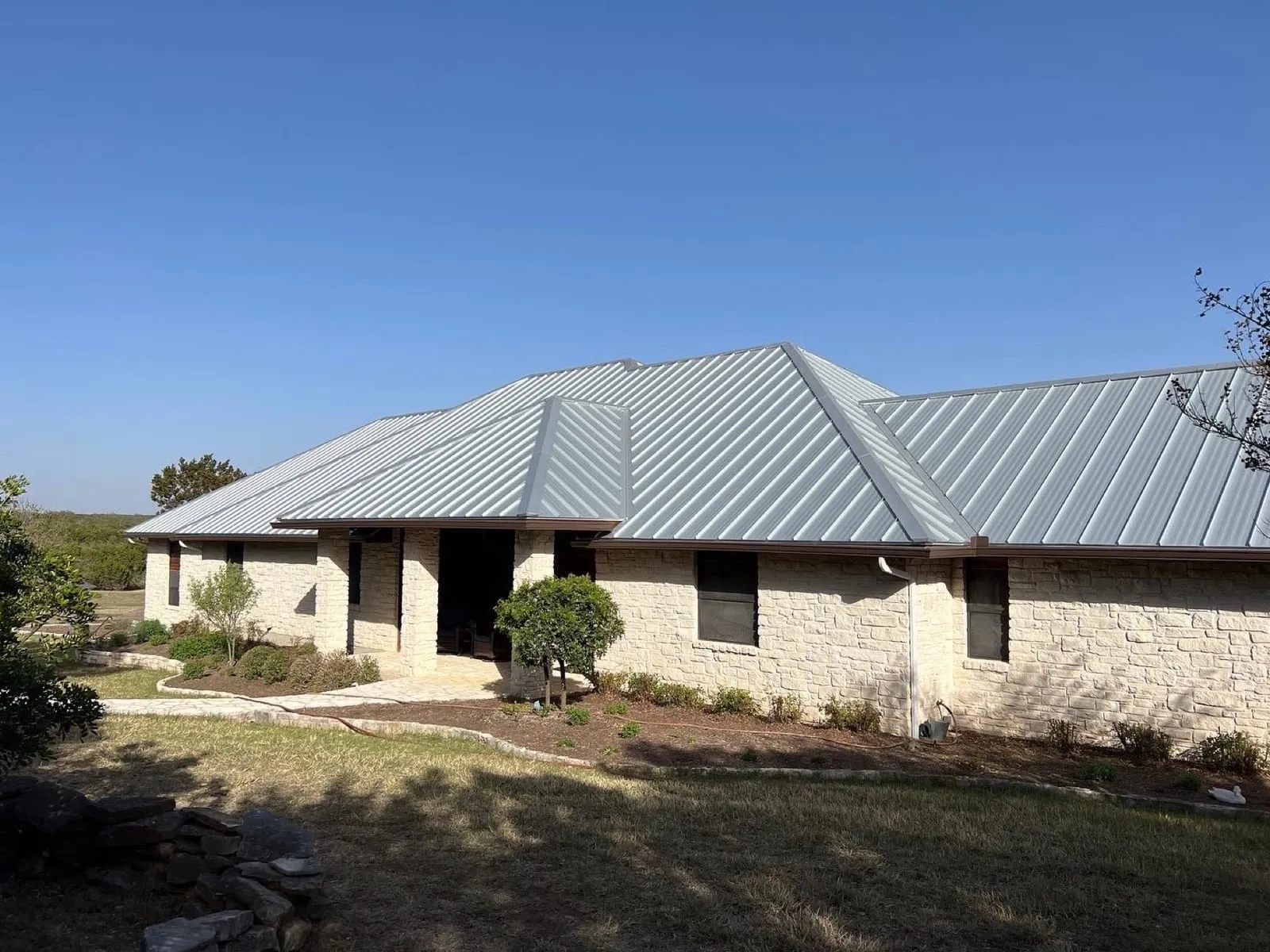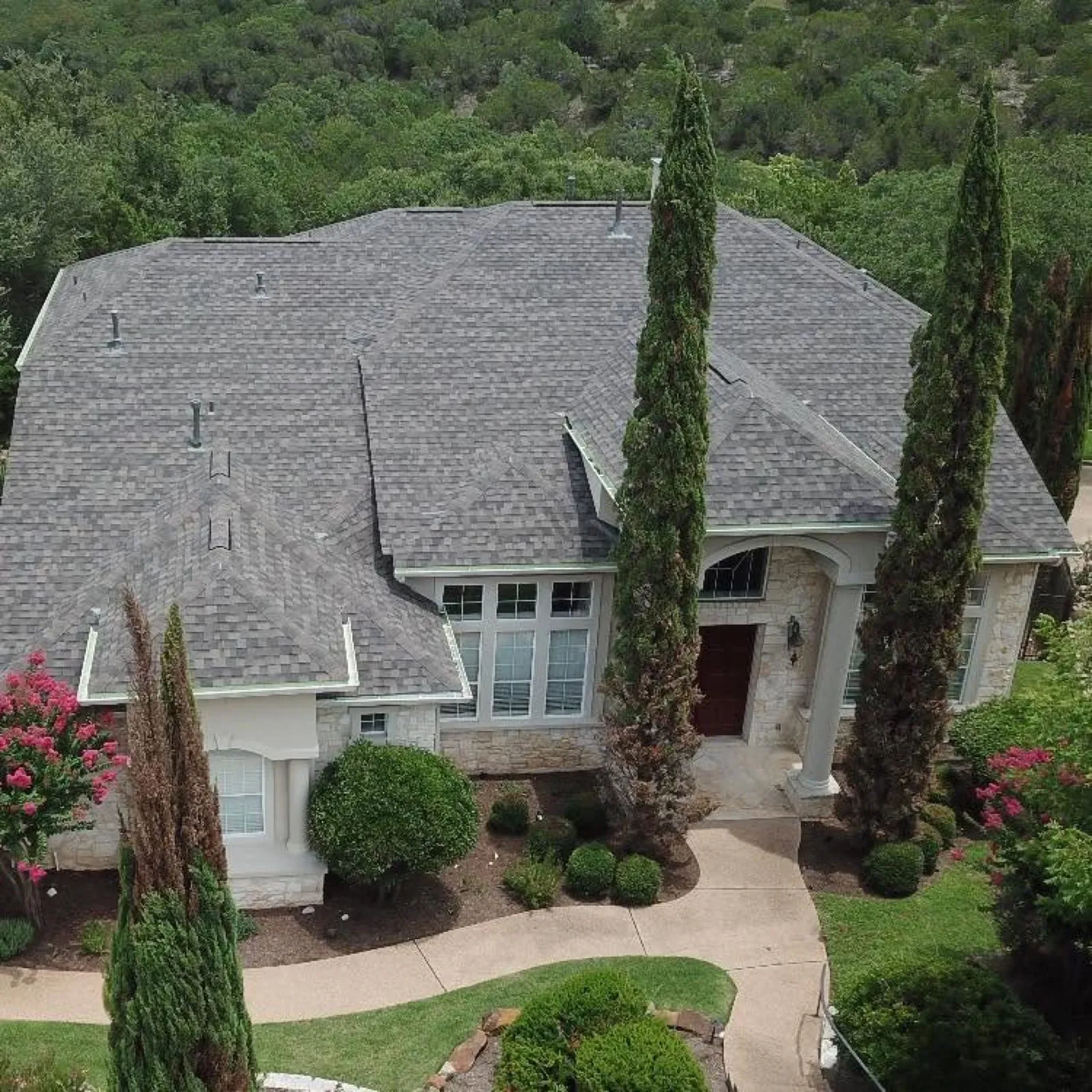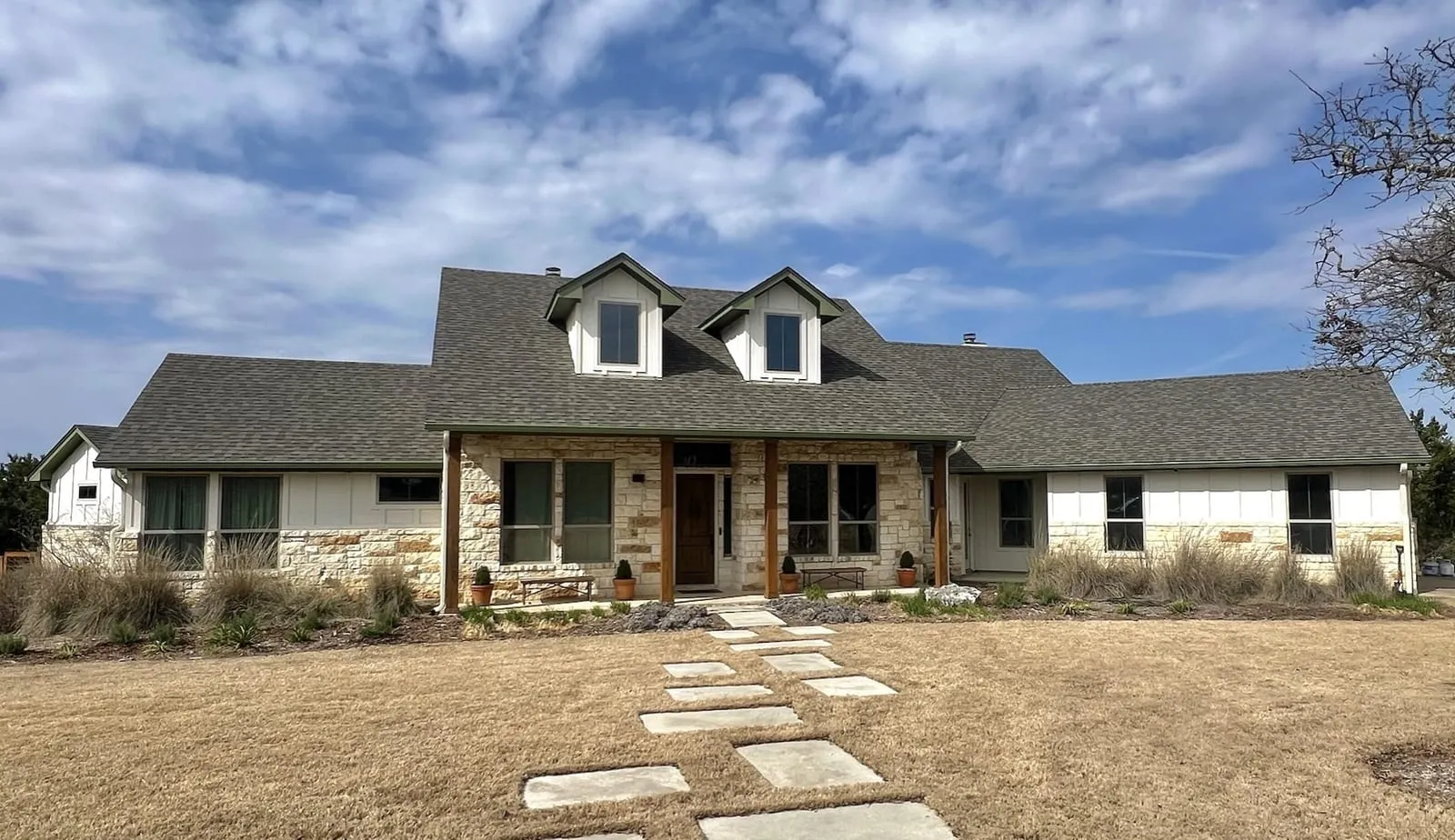
Short answer: Round Rock does not require a building permit for a standard like-for-like residential re-roof — only for work that modifies the roof structure — but many Round Rock subdivisions do require HOA approval of your shingle color and profile before you start. Costs track the wider Austin metro closely, and a large share of the city’s 1990s and 2000s housing stock is hitting the end of its roof life right now.
Round Rock is one of the more predictable roofing markets in Central Texas, and that’s mostly a story about timing. The city grew in concentrated bursts, which means whole neighborhoods were roofed within a season or two of each other — and now reach the end of their service life together. If your neighbors are suddenly all getting new roofs, that’s not a coincidence and it’s not a sales push.
Here’s what actually matters for a roof replacement or repair in Round Rock.
Do you need a permit to replace a roof in Round Rock?
For a standard residential re-roof, no. The City of Round Rock does not require a building permit to replace a residential roof with like-for-like materials. That’s a genuinely useful thing to know, because permit rules vary city to city across the metro and a lot of homeowners assume the worst.
Two caveats that do apply:
- Modifying the roof requires a permit. If the work changes the roof structure — altering the pitch, reframing, extending the roofline, adding a dormer — that’s a residential remodel permit, not a simple re-roof.
- Drip edge is required. Round Rock enforces drip edge installation along eaves and rakes. It’s a small metal flashing detail that directs water into the gutter instead of behind the fascia, and it’s an easy thing for a cut-rate crew to skip.
If you want to confirm anything for your specific project, Round Rock Building Inspections is at 512-218-5550. And a note on vetting contractors: any roofer who can’t tell you the permit situation in the city they’re working in is telling you something about how often they work there.
Does your HOA need to approve the new roof?
Very often, yes — and this catches more Round Rock homeowners than the permit question does.
A large share of Round Rock’s subdivisions have active HOAs with architectural guidelines, and roofing is squarely covered. Depending on the neighborhood, the rules may govern shingle color, shingle profile, and occasionally whether metal is permitted at all.
The sequence that saves you grief:
- Choose your material and color with your roofer.
- Submit it to the HOA architectural committee before scheduling the work.
- Get the approval in writing, and keep it.
Approval commonly takes a few weeks. Building that into the timeline is straightforward; discovering it after a crew has torn off your old roof is not. Note that insurance claim deadlines don’t pause for HOA review, so if you’re working a storm claim, start the HOA submission early.
Why are so many Round Rock roofs due at once?
Because the city’s growth came in waves, and roofs age on a schedule.
Round Rock expanded dramatically through the 1990s and 2000s, and subdivisions from that era went up fast — which means they were roofed fast, largely with architectural asphalt shingles. In Central Texas, those shingles realistically deliver 15 to 20 years, not the 25 or 30 on the wrapper. Our guide to how long a roof lasts in this climate explains why the gap is so wide here: sustained triple-digit heat, punishing UV, sharp thermal swings when a storm hits a hot roof, and hail.
Run the arithmetic on a subdivision built in 2002 and you land in exactly the window Round Rock is in now. If your roof is original to a home built before roughly 2010, it is at minimum worth an inspection — not because it’s necessarily failing, but because you want to know where you stand before a storm makes the decision for you.
What does a roof replacement cost in Round Rock?
Round Rock tracks the broader Austin metro closely enough that there’s no separate Round Rock price list. For 2026, most homeowners replacing an architectural shingle roof on a typical 2,000 square foot home land in roughly the $12,000 to $18,000 range, with metal and tile systems running higher.
What actually moves your number isn’t the city — it’s the roof:
- Pitch and complexity. Steep roofs and cut-up rooflines with multiple valleys, dormers, and penetrations cost more to work safely and flash correctly.
- Decking condition. Rotten or sagging decking discovered at tear-off is the most common source of a change order. A good estimate tells you the per-sheet price up front.
- Material choice. Impact-rated Class 4 shingles or a metal system cost more initially and last meaningfully longer in a hail corridor — and many insurers discount premiums for them.
Our Austin roof replacement cost guide breaks the ranges down by material and explains what drives each line on an estimate.
Repair or replace: which one is your roof?
Age is the deciding variable, damage extent is the tiebreaker.
Repair usually makes sense when the roof is under about 12 years old, the damage is isolated to one area, and the rest of the shingle field is in sound shape. A lifted shingle, a failed pipe boot, or damaged flashing is a straightforward roof repair — and putting it off through a Central Texas storm season is how a cheap fix becomes decking replacement and interior drywall work.
Replacement usually makes sense when the roof is past 15 years, granule loss is widespread, you’re seeing repeat leaks in different spots, or a storm did damage across multiple slopes. At that point repairs stop being repairs and start being installments on a replacement you’re going to do anyway.
If a storm is what put you here, document everything before anyone touches the roof, and get an inspection before you call your insurer — a professional assessment tells you whether you have a claim worth filing. Our storm damage and insurance claim work covers that end to end.
How do you pick a roofer in Round Rock?
The same way you’d pick one anywhere in a hail market — carefully, and preferably not from someone who knocked on your door.
Round Rock draws out-of-state storm chasers after every significant hail event. The pattern is consistent: heavy door-knocking, urgency, a suspiciously round number, pressure to sign an authorization on the spot, and no local presence when a warranty issue surfaces two years later.
What to check before you sign anything:
- A real local track record, with a physical address and jobs in Williamson County you can look at.
- Current liability insurance and workers’ compensation. Ask for certificates. A crew injured on your roof without coverage is your problem.
- A written scope, not a one-line total — materials, underlayment, flashing, ventilation, decking price, and cleanup should all be on paper.
- Clear warranty terms, separating the manufacturer’s material warranty from the roofer’s workmanship warranty.
- No deductible games. In Texas it is illegal for a contractor to pay, waive, or rebate your insurance deductible. Anyone offering a “free roof” is describing a crime and putting your claim at risk.
Thinking about your Round Rock roof?
Whether you’ve got a leak, a storm you’re unsure about, or just a roof that’s getting up there in years, the useful first step is knowing exactly what shape it’s in. Schedule your free roof inspection and we’ll document the condition, tell you straight whether you’re looking at a repair or a replacement, and walk you through what it involves — including the HOA and permit side. See our full Round Rock service area for everything we handle locally.
Sutton Roofing is a family-owned roofer serving Round Rock, Austin, and the Central Texas Hill Country, helping local homeowners with roof repair, replacement, and storm damage since 1979.