Short answer: Most Austin roof replacements take 1 to 2 days once the crew arrives. Day one is tear-off down to the wood, decking repairs and underlayment. Day two is shingles, ventilation, flashing, cleanup and a walkthrough. Bigger or more complex roofs take longer, and so does rain.
A new roof is a big purchase that happens fast, and it’s loud. Here’s what actually happens, using a real Sutton job, photographed over two days, in Southeast Austin as the example.
What happens before the crew shows up?
Most of the decisions happen before install day.
- Inspection and estimate. The roofer walks the roof, checks the attic and writes up the scope: materials, underlayment, flashing, ventilation and decking. Ask for a per-sheet price on decking up front.
- Insurance, if a storm caused it. The adjuster’s approval sets the scope and the budget. Our insurance claim page walks through that part.
- Material and color. Pick the shingle line and color, or metal. If you’re in an HOA, get its approval in writing before anything is ordered.
- Scheduling. Install dates depend on the weather. Expect a call if the forecast changes.
- Delivery. Ask when materials will arrive. It’s often the day before or the morning of.
How should you prepare your home?
A little prep keeps the day smooth:
- Move cars out of the driveway and garage. Trucks and roofing debris need the space.
- Take down pictures and mirrors on walls that shake with hammering, especially top-floor rooms.
- Cover things in the attic. Dust and old nails can fall through during tear-off.
- Move patio furniture, grills and planters away from the house.
- Plan for pets and kids. It’s loud for hours, and the ground near the house isn’t safe while work is going on.
- Tell your neighbors. It’s a courtesy, and it helps if trucks block a shared driveway.
Day one: tear-off, decking and underlayment
Day one is about getting down to the wood and sealing it back up.
- Set-up. The crew protects the house and landscaping and gets a spot ready for debris.
- Tear-off. The old shingles, underlayment and worn flashing come off down to the decking. This is the loudest part.
- Decking check. With the deck bare, the crew looks for soft, rotten or water-damaged sheets and replaces them. This is the one surprise a good estimate prices ahead of time.
- Drip edge and underlayment. Metal drip edge goes on at the eaves, underlayment covers the deck, then drip edge goes on along the rake edges over it.
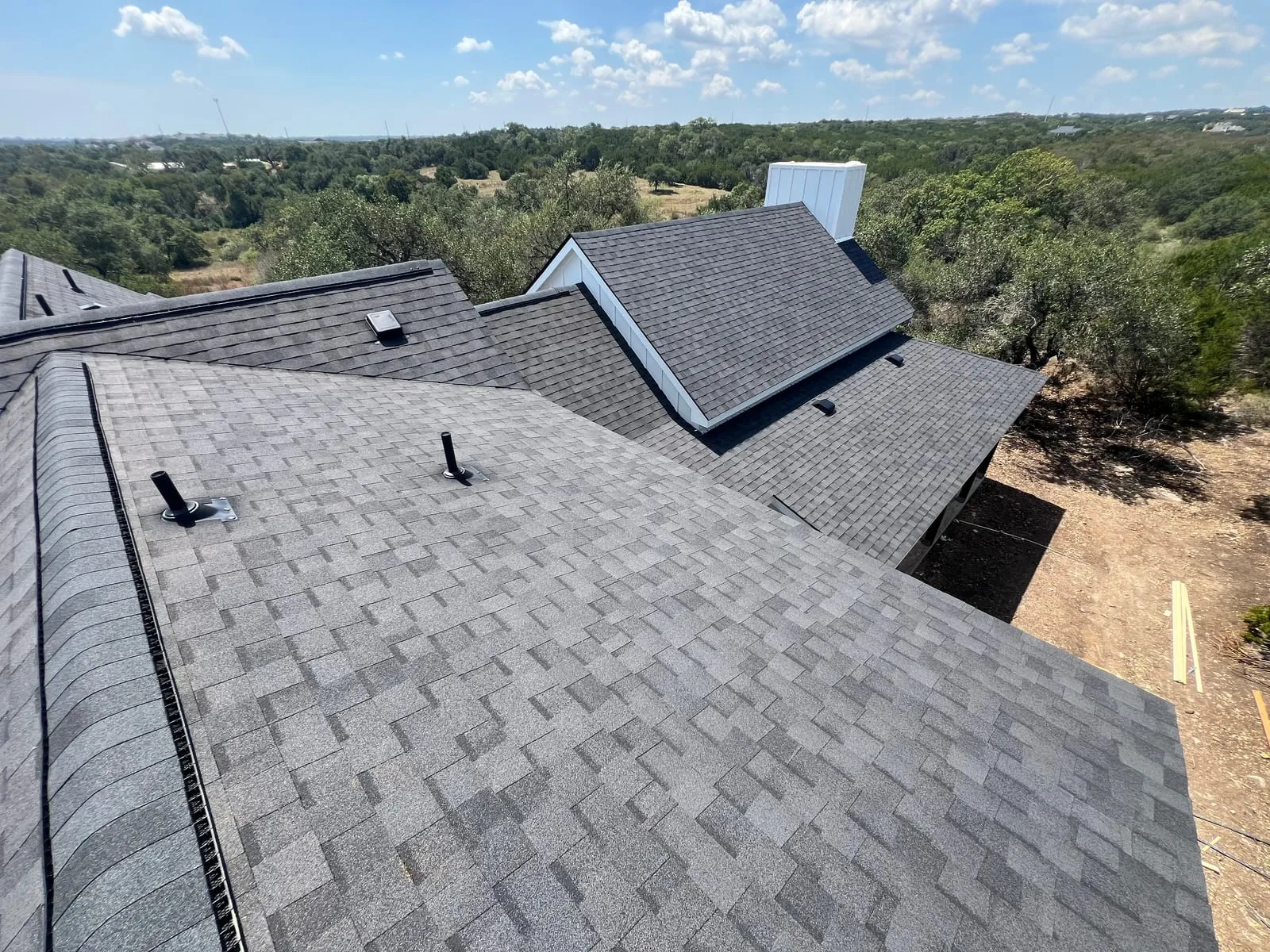
On the Southeast Austin job, day one started with a worn brown shingle roof dotted with box vents. Before the day was out it was stripped to the deck, covered in synthetic underlayment, and the new shingle bundles were staged on the ridge, as in the photo at the top of this post. Once the underlayment is down, the deck is covered, which protects the house from most passing rain.
Day two: shingles, ventilation and flashing
Day two is when it starts to look like a new roof.
- Starter strips and shingles, working up from the eaves.
- Flashing at walls, chimneys, skylights and valleys, plus new pipe boots. They’re a common source of leaks, so they should be new, not reused.
- Ventilation. Vents go in or get upgraded. A hot attic shortens shingle life, so this matters in Austin.
- Ridge and hip caps finish the top edges.
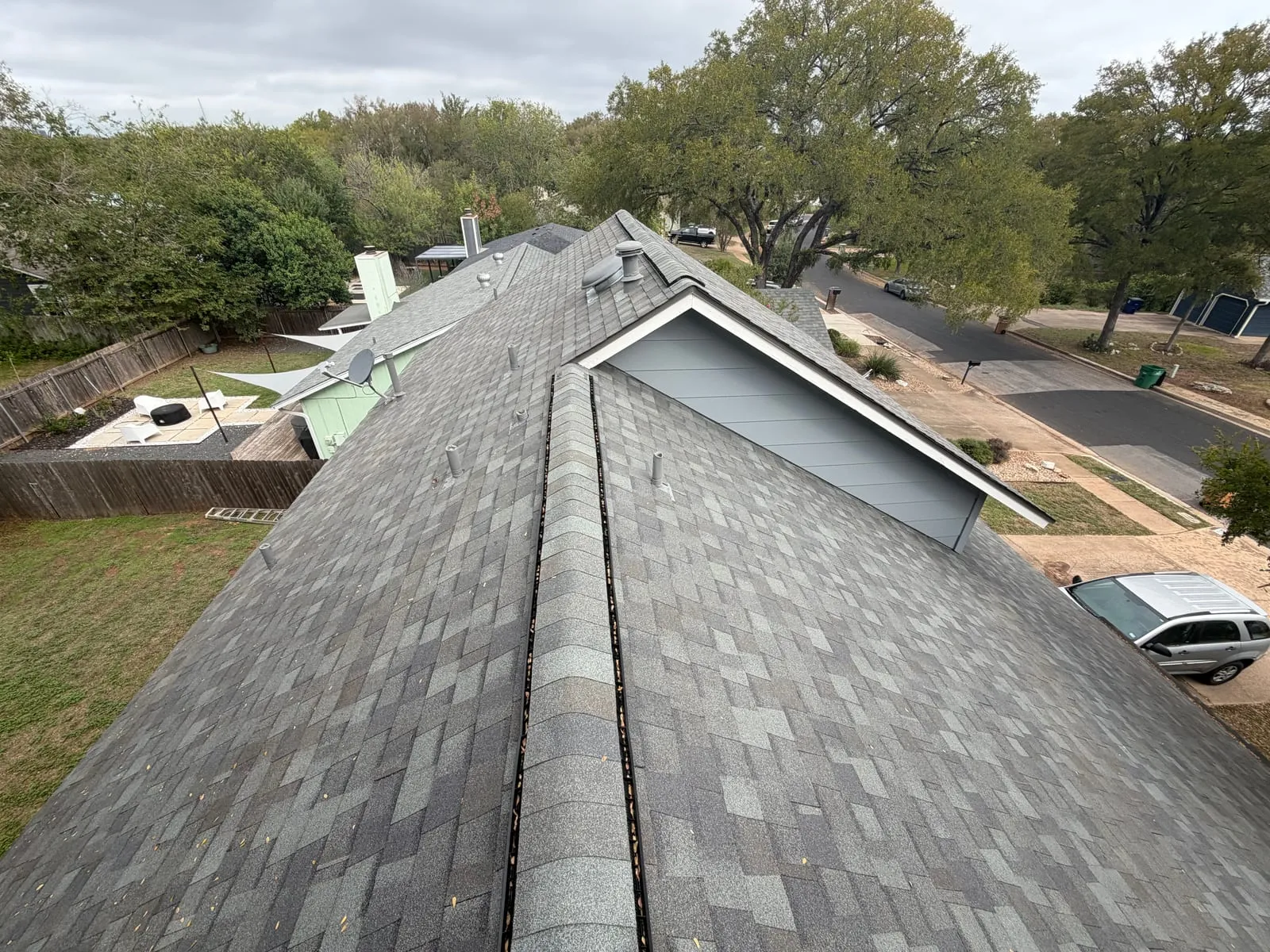
On our Southeast Austin job, the old box vents came out with the tear-off on day one, and on day two a continuous ridge vent went on along the main ridge. See the finished photos.
Cleanup and the final walkthrough
Ask your roofer what cleanup includes. It should cover:
- Debris hauled away, and gutters cleared of granules and scraps.
- A magnetic sweep of the yard, driveway and beds for stray nails.
- The walkthrough. Walk the finished job with the roofer. Look at the flashing, the vents and the ridge, and ask about anything that doesn’t look right.
What makes a replacement take longer?
The day count goes up when:
- The roof is large, steep or cut up with dormers, valleys and multiple planes.
- The decking is in bad shape and many sheets need replacing.
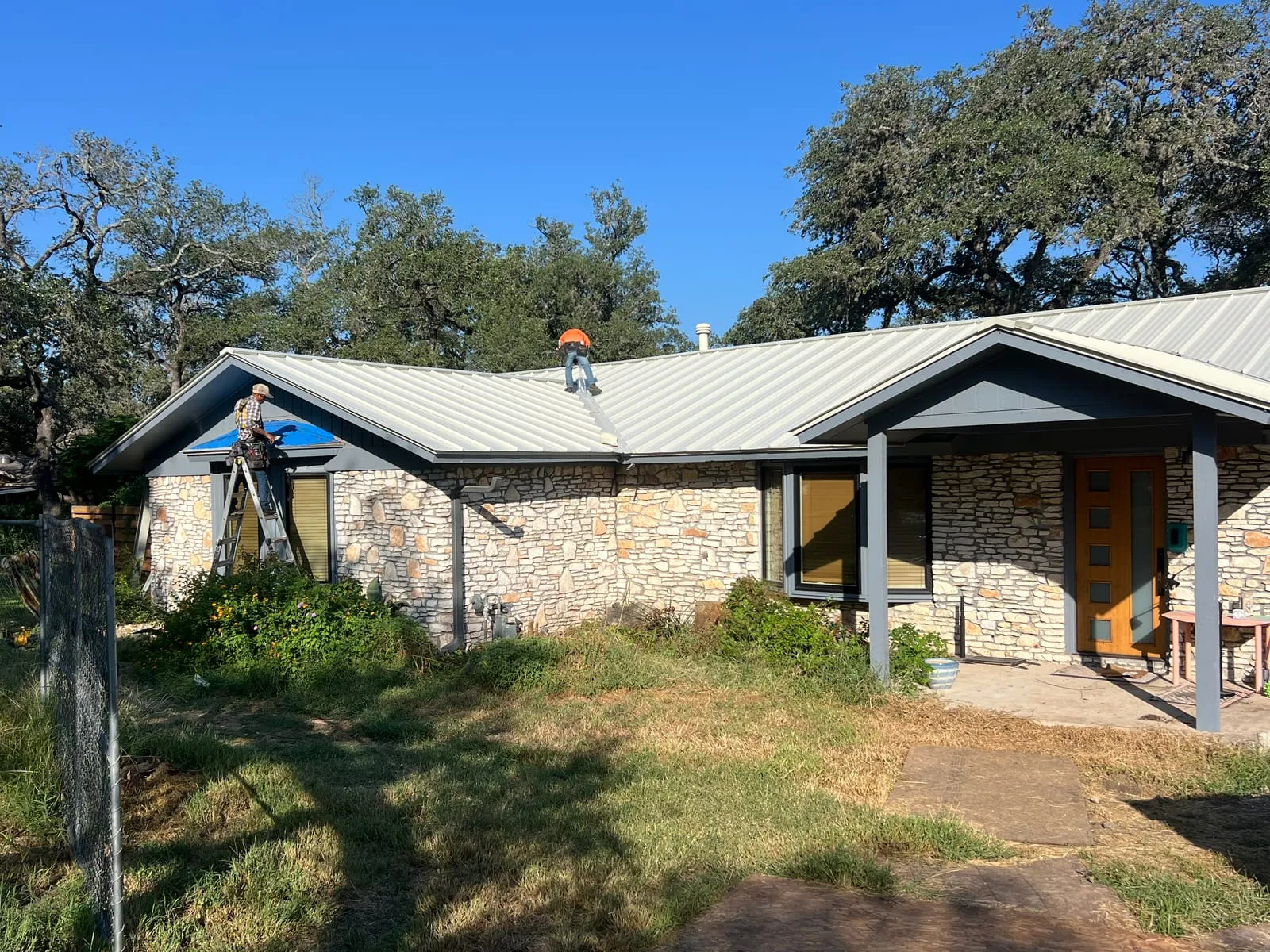
- There are two materials. Our Tarrytown job paired shingles on the upper roof with standing seam metal on the lower roof, plus new gutters.
- It rains. The crew covers exposed areas and comes back when it’s dry.
What paperwork should you get afterward?
Before the job’s closed out, make sure you have:
- The final invoice listing materials and any decking replaced.
- Warranty documents for the manufacturer warranty and the roofer’s workmanship warranty. Our guide to roof warranties explains what each covers.
- Insurance paperwork, if a claim paid for it. Replacement cost policies usually hold back part of the payment (recoverable depreciation) until the work is done, and the final invoice releases it. See our insurance guide.
- Impact-rating proof, if you installed impact-resistant shingles. Your roofer can fill out TDI form PC068, or your insurer’s own form, so you can ask for the premium credit.
Ready to plan yours?
Schedule your free roof inspection and we’ll tell you how long your roof will take, what we expect to find, and what you’ll need to do before install day. Learn more about our roof replacement process, or browse more finished projects.
Sutton Roofing is an Austin roofer helping Central Texas homeowners with roof repair, replacement, and storm damage.