


The roof goes on first
On a new build, the roof is not the finishing touch. It is the thing that lets everything else start — until it is on and closed, nothing inside is safe to begin. So the roofer works to someone else’s schedule, on a building that is still moving, with a framing crew, a stucco crew and a mason all waiting on the same weather.
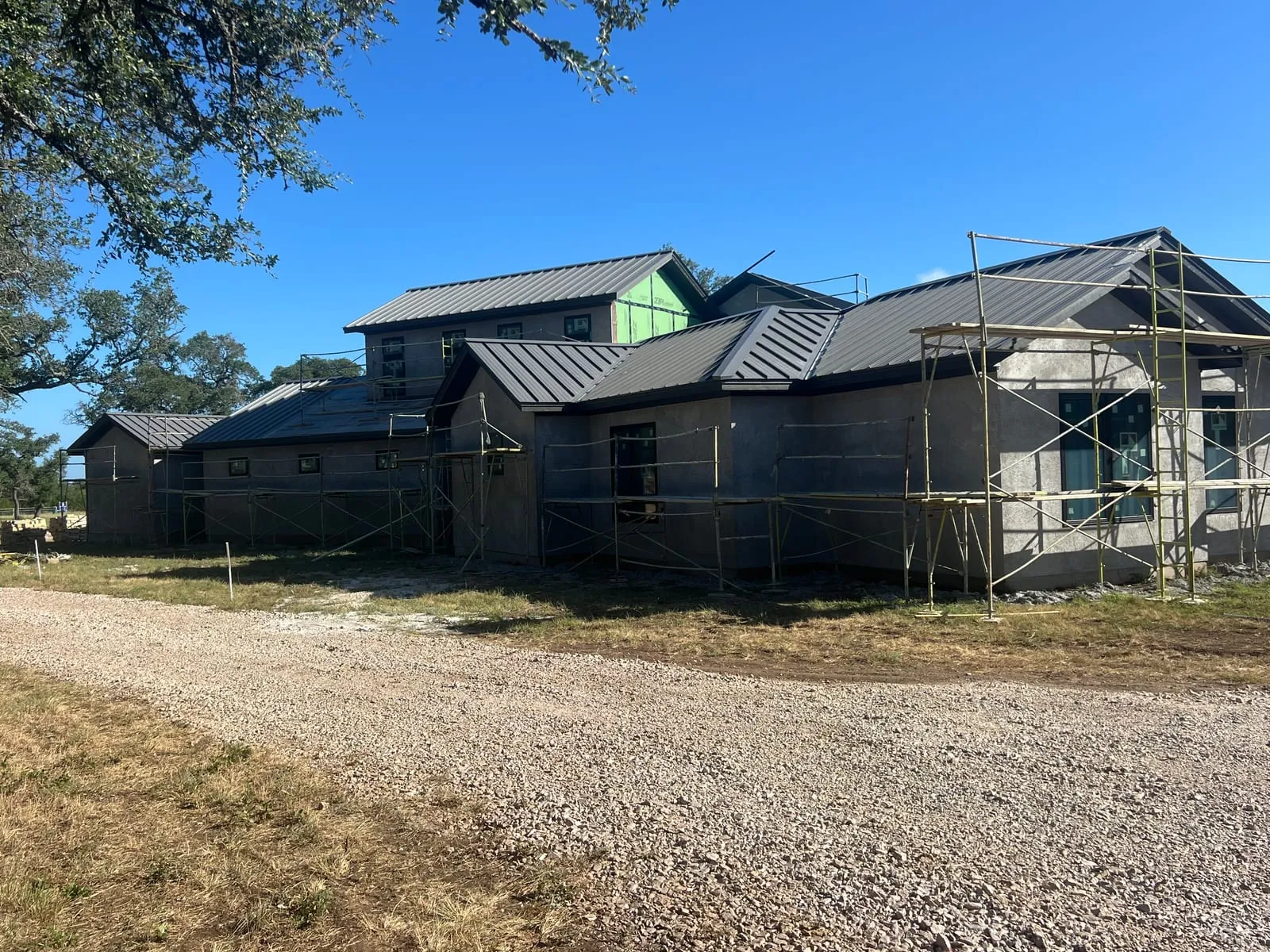
This is a big Central Texas house, and the roof does a lot of work: a run of connected gables, dormers cut into the main planes, a deep covered porch stepping down the long elevation, and a chimney coming through near the ridge. Everywhere two of those meet there is a valley, and valleys are where roofs leak. A valley on a standing seam roof is cut, formed and closed, not lapped over and hoped for the best.
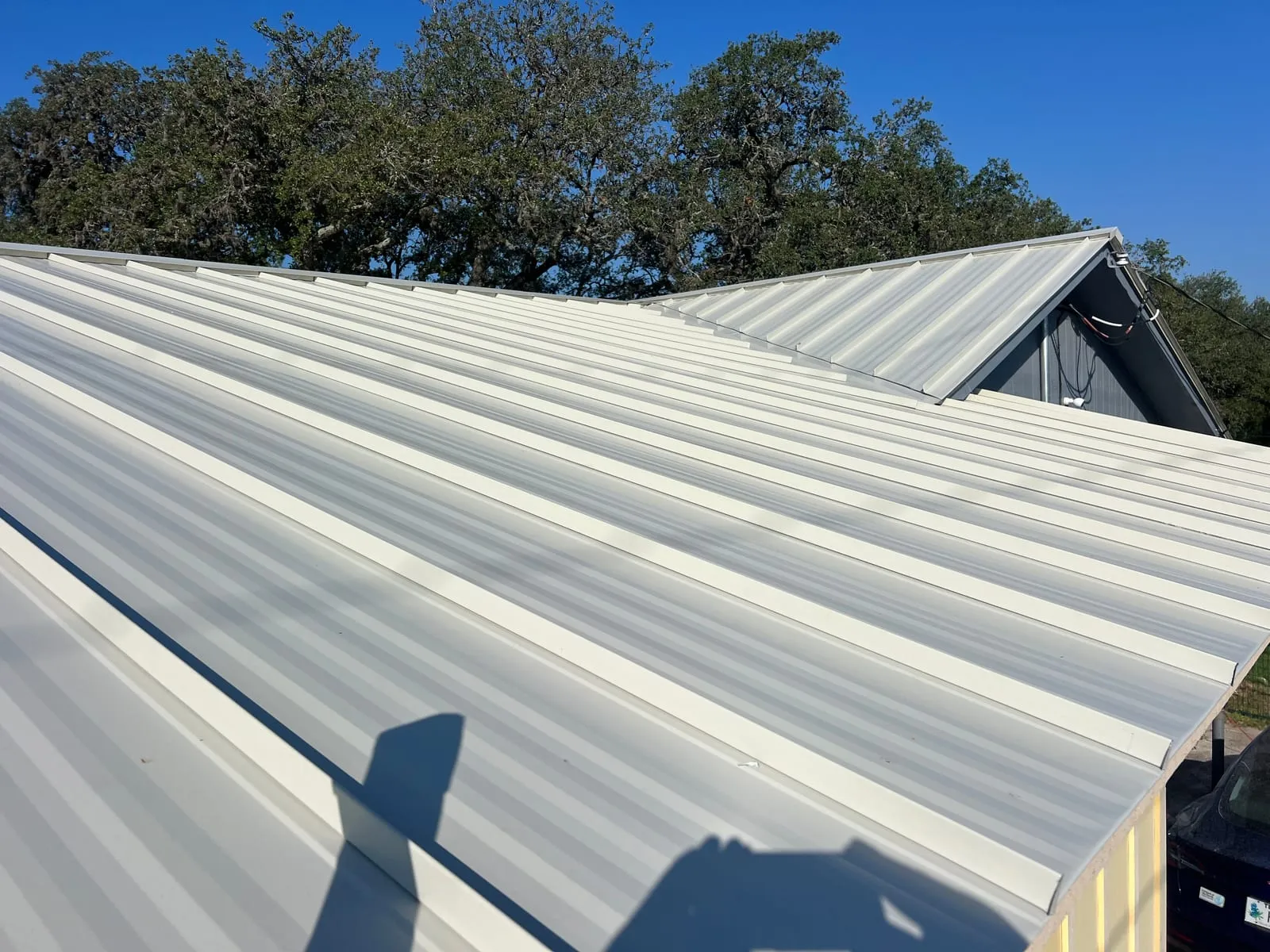
The panels run ridge to eave in one piece. On a roof this size that matters: no horizontal seams across the field, nowhere for water to get a foothold, and expansion taken up in the seam instead of a fastener hole. The ridges and hips are capped and the eaves boxed, so the roof reads as one dark surface across every plane rather than a collection of roofs that happen to touch.
By the time these photos were taken the scaffolding was still up, the stone was still on pallets, and half the walls were still in sheathing. The roof was finished. That is the order it is supposed to go in.